
Quick answer: AI visibility for dentists and Dental Service Organizations is the ability to be understood, cited, and recommended by ChatGPT, Gemini, Perplexity, and Google AI when patients ask who to trust for a specific treatment, specialty, or location.
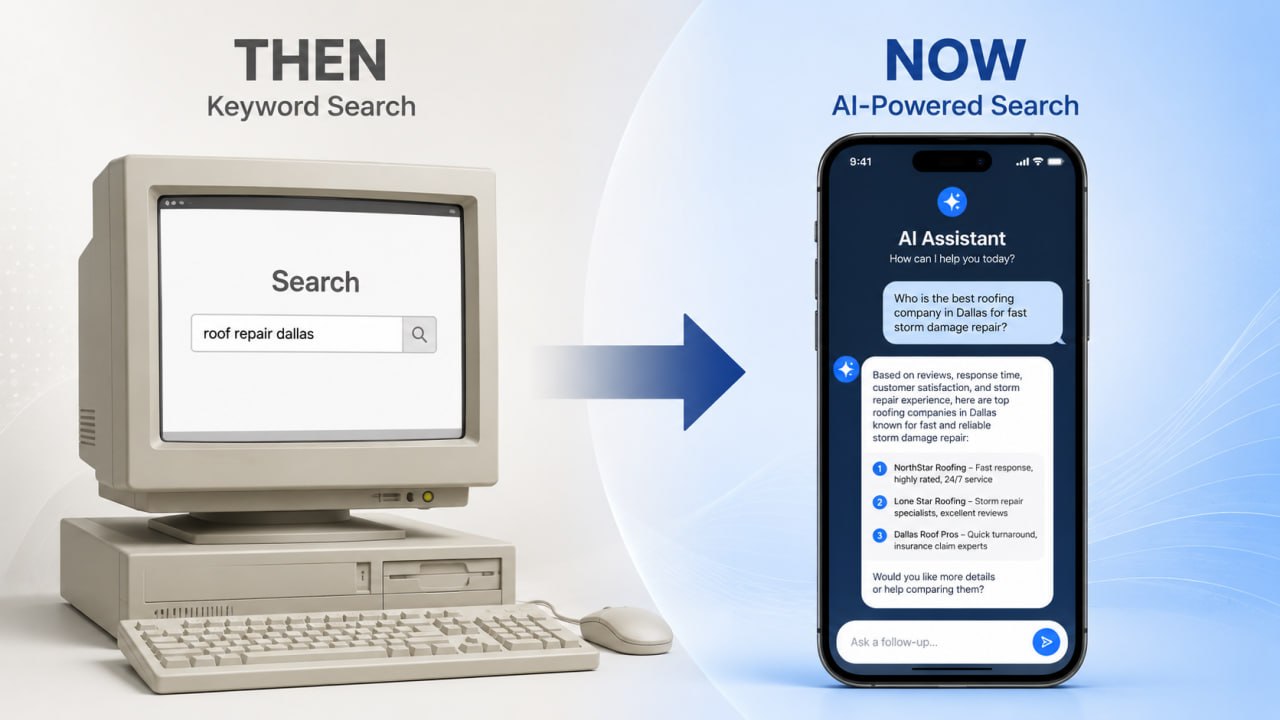
Dentists and DSOs have spent years building visibility around Google Maps, reviews, local SEO, and referrals. Those signals still matter. The problem is that buyers and patients are now asking AI tools to summarize options before they ever click a directory, compare websites, or call the front desk.
That changes the visibility problem. A dental practice now has to be easy for machines to interpret, not just easy for humans to skim. For DSOs, the challenge is even bigger because the parent organization needs authority while each individual office needs its own location-level credibility and clarity.
Parent DSO brand
What patients and AI tools need
Clear organization identity, specialties, markets served, and trust signals.
Why dental groups get missed
Parent sites often read like corporate overviews instead of searchable care entities.
Individual practice locations
What patients and AI tools need
Specific services, city relevance, provider context, reviews, and accurate local signals.
Why dental groups get missed
Location pages are often thin, duplicated, or too weak to stand alone.
Cross-platform consistency
What patients and AI tools need
Matching business details across website, GBP, citations, and support content.
Why dental groups get missed
Conflicting details create ambiguity for AI systems trying to recommend a provider.
| Visibility layer | What patients and AI tools need | Why dental groups get missed |
|---|---|---|
| Parent DSO brand | Clear organization identity, specialties, markets served, and trust signals | Parent sites often read like corporate overviews instead of searchable care entities |
| Individual practice locations | Specific services, city relevance, provider context, reviews, and accurate local signals | Location pages are often thin, duplicated, or too weak to stand alone |
| Cross-platform consistency | Matching business details across website, GBP, citations, and support content | Conflicting details create ambiguity for AI systems trying to recommend a provider |

What is AI visibility for dentists and Dental Service Organizations?
AI visibility for dentists and DSOs means your organization can be recognized, interpreted, and recommended inside AI-driven answers when someone asks for dental help, compares providers, or searches by treatment and location. It is not only about ranking. It is about becoming machine-readable enough to be cited with confidence.
For a single practice, that means the website, location data, reviews, and service pages must make the practice easy to understand. For a DSO, it means the parent brand and every office need aligned but distinct signals so the system can connect the right patient question to the right organization and location.
How are patients finding dentists online now that AI answers come first?
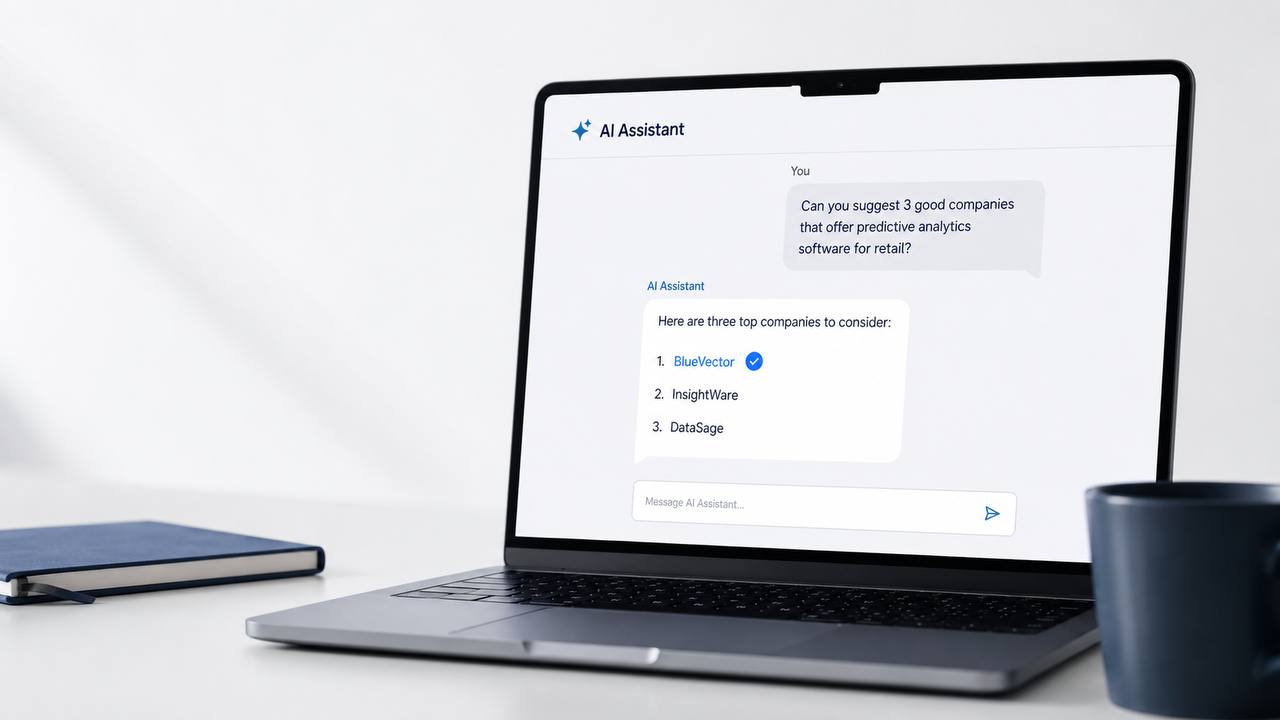
Patients are increasingly asking direct, conversational questions such as which dentist is best for implants near me, what pediatric dentist handles anxious kids, or which dental group has multiple offices in my city. When AI answers summarize those options first, the recommendation layer starts shaping choice before the practice website gets visited.
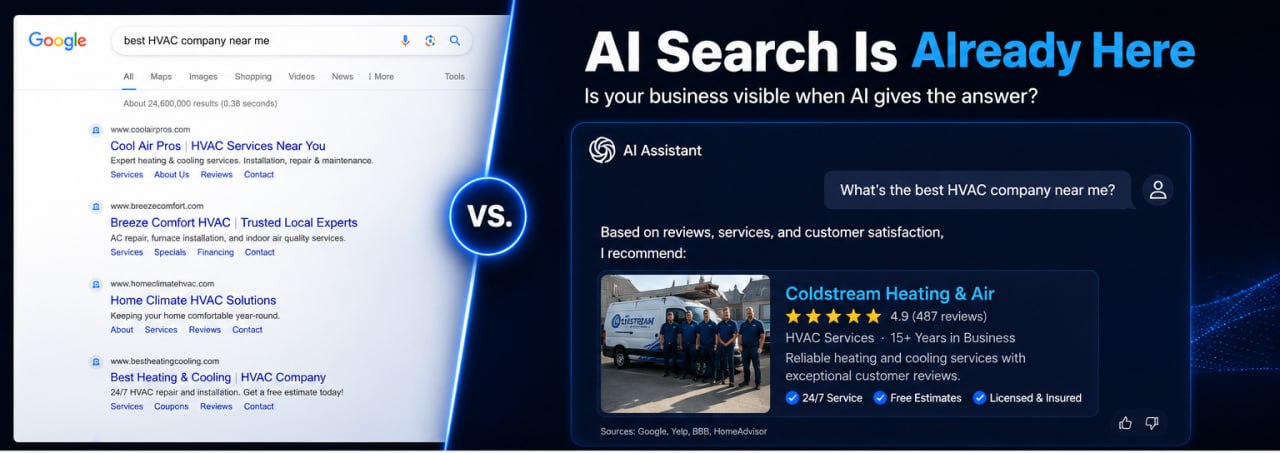
This is why the old visibility playbook is under pressure. Searchers are not always browsing ten links anymore. They are often narrowing options inside an answer, then clicking only after trust has already been partially assigned by the platform.
Why is my dental practice not showing up in ChatGPT, Gemini, or Perplexity?
Your dental practice usually fails to appear in AI answers because the system cannot confidently connect your services, location, trust signals, and business identity into a clear recommendation. Weak location pages, thin service explanations, missing schema, inconsistent citations, and outdated profiles all make the practice harder for AI to trust.
The problem is rarely one missing tactic. It is usually a signal problem across the entire footprint. A practice may have decent reviews and still be hard for AI to interpret if the site structure, entity signals, and cross-platform consistency are weak.
Why is traditional dental SEO no longer enough for dentists and DSOs?
Traditional dental SEO is still foundational, but it is no longer enough because AI systems evaluate more than rankings, title tags, and maps visibility. They compare whether your content is clear, your data is structured, your business details are consistent, and your trust signals are strong enough to support a direct recommendation.
That means Google Business Profiles, local pages, reviews, and backlinks still matter, but they now need a machine-readable layer around them. Without that layer, a practice may rank reasonably well and still fail to get surfaced when AI is asked to recommend providers.
Why do DSOs need visibility for the parent organization and each individual practice?
DSOs need two levels of visibility because AI systems may evaluate the parent organization for scale, trust, specialties, and market presence, while still evaluating each local office for service match, geography, and patient relevance. A strong parent brand cannot fully compensate for weak location-level visibility when a patient needs a nearby provider.
This is where many DSO strategies break down. The corporate site may look polished, but the individual practice pages often remain too generic to compete in AI recommendation environments. The result is a group that looks strong in theory and weak in real patient discovery.
Entity identity
Parent organization should clarify
Brand, specialties, regions served, and organization authority.
Each practice location should clarify
Office name, city, provider context, and local treatment relevance.
Service match
Parent organization should clarify
Network capabilities and care categories.
Each practice location should clarify
Specific services and patient scenarios that office handles.
Trust signals
Parent organization should clarify
Group credibility, standards, and operational consistency.
Each practice location should clarify
Reviews, accurate local details, and office-level support content.
| DSO visibility need | Parent organization should clarify | Each practice location should clarify |
|---|---|---|
| Entity identity | Brand, specialties, regions served, and organization authority | Office name, city, provider context, and local treatment relevance |
| Service match | Network capabilities and care categories | Specific services and patient scenarios that office handles |
| Trust signals | Group credibility, standards, and operational consistency | Reviews, accurate local details, and office-level support content |
What signals help AI recommend a dentist, specialist, or dental group?
AI systems look for clear business identity, strong location data, consistent citations, natural-language service pages, current reviews, and structured data that explains what the practice is, where it operates, and why it is credible. When those signals align, AI has more evidence to surface the practice confidently.
For dental organizations, the most important signals usually include service clarity, office-specific relevance, provider and specialty context, schema markup, and files such as llms.txt and ai.txt that improve how the site is interpreted. The goal is less ambiguity, not more noise.
How fast can a dentist or DSO improve AI visibility?
Most dental organizations can install the core AI visibility layer quickly, but visible improvement depends on crawl timing, trust depth, and how clean the existing footprint already is. In many cases, the initial setup can happen within 24 hours, while meaningful early movement often appears within 7 to 14 days.
That timeline is realistic because the work is not magic. It is structured cleanup and machine-readable clarity. Organizations that already have decent reviews, useful location pages, and stable citations often move faster because the foundation is there even if the AI layer is missing.
How does the Get Cited AI Done For You service help dentists and DSOs move faster?
The $497 Done For You service helps dentists and DSOs move faster by installing the missing AI visibility layer without turning the work into another internal project. It adds the files, structure, and page-level clarity that make a practice or dental group easier for AI systems to understand and recommend.
For DSOs, the advantage is repeatability. Instead of solving this once at the corporate level and hoping the locations inherit the benefit, the same process can be applied across parent and practice pages so the organization gains a more scalable visibility framework instead of a one-page fix.
What should dentists and DSOs do first if they want to show up in AI search?
If you want to show up in AI search, start with a free visibility check instead of assuming your local SEO stack already covers the problem. That baseline will show whether AI tools can identify your organization, understand each location, and connect your services to the queries patients are already asking.
Frequently Asked Questions About AI Visibility for Dentists and DSOs
How long does it take a dental practice to improve AI visibility?
Most dental practices begin with installation and signal cleanup first, then watch for movement as AI systems recrawl and reinterpret the site. In many cases, early changes can begin to show within 7 to 14 days, although visibility continues to improve as citations, reviews, and supporting content get stronger over time.
Does every dental office in a DSO need its own AI visibility setup?
Yes, because AI systems do not recommend a DSO brand in the abstract for every patient need. They often need location-specific service, geography, provider, and reputation signals. The parent organization needs authority and clarity, but each office still needs its own machine-readable identity to show up for local treatment searches.
Is dental SEO still important if patients are using ChatGPT and Google AI?
Yes, dental SEO still matters because reviews, local pages, Google Business Profiles, and strong service content remain part of the evidence AI systems evaluate. The shift is that SEO alone is no longer enough. Dental groups now need clear AI-readable structure, schema, and entity consistency in addition to classic local optimization.
What does the $497 Done For You service include for dentists and DSOs?
The Done For You service installs the core AI visibility layer for a dental site, including files such as llms.txt and ai.txt, structured data improvements, and cleaner signal clarity around services, locations, and trust indicators. For DSOs, it creates a repeatable deployment path that can be applied across the parent brand and individual practice sites.
Can one DSO website support every location's visibility without separate location pages?
Not reliably. A parent site can strengthen brand authority, but AI systems still need clear location-level pages and signals to match patient questions to the right office. If all locations are blended together, the organization becomes harder to interpret and weaker in local recommendation scenarios.
What should dentists and DSOs do first if they suspect an AI visibility problem?
Start with a visibility check instead of assuming your current SEO covers the problem. The right baseline shows whether AI systems can identify your services, geography, and credibility, and it makes it easier to see whether the real issue is missing structure, weak trust signals, or poor location-level clarity.
References
Oral Health Group: Winning the AI search era in dental marketing
American Dental Association: What are the main types of DSOs?
Remedo: DSO Marketing Strategies for Growth
Decisions in Dentistry: Why Your Dental Practice Isn't Showing Up When Patients Ask AI for Help