Quick Answer
80 percent of the B2B buying journey now happens before a buyer contacts any vendor, according to Forrester research covering 18,000 buyers in 2026. AI tools like ChatGPT, Perplexity, and Google AI Overviews now handle early research and build the buyer's shortlist before the buyer visits a website. If AI tools are not citing your business, you are not on that shortlist. Brands that get cited earn 120 percent more clicks than uncited competitors on the same page.
80 percent of the buying journey is already over before a buyer picks up the phone. That number, from a Forrester study of 18,000 buyers published in 2026, is not a trend to watch. It is happening right now, in your market, with the customers you are trying to reach.
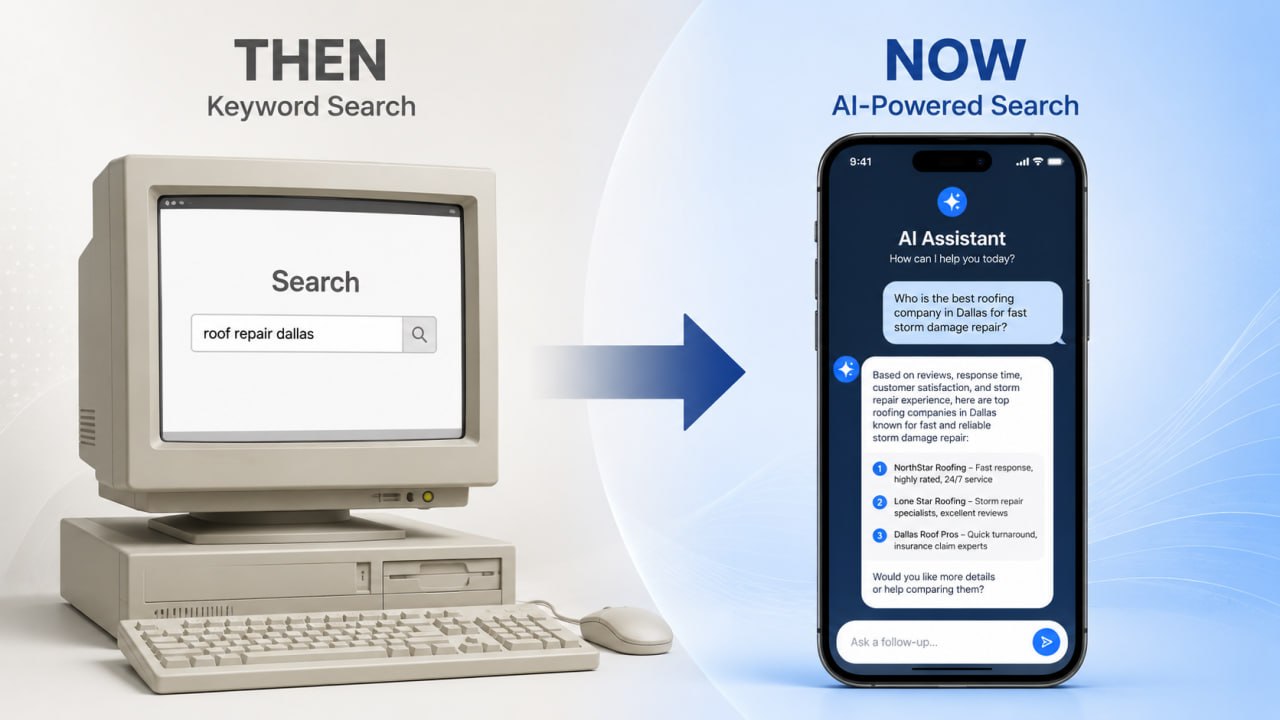
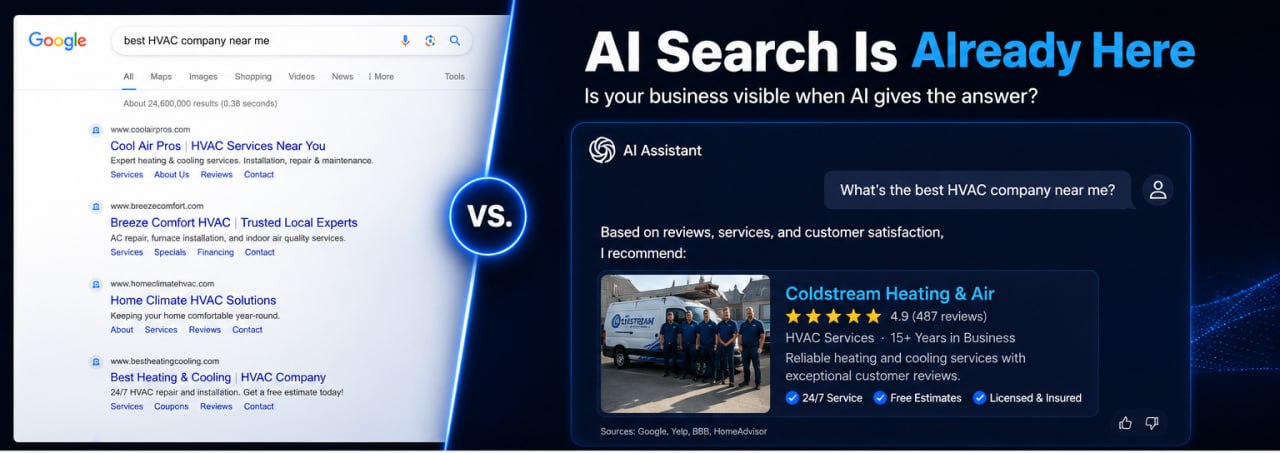
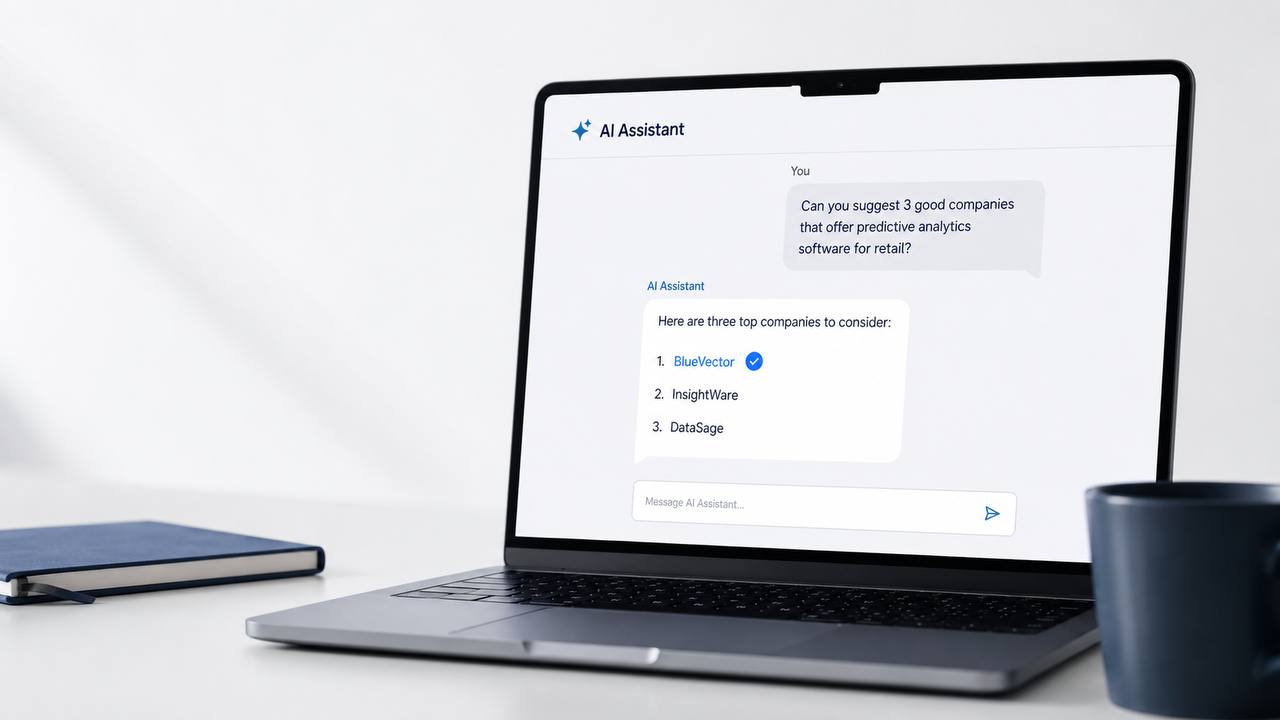
AI tools have taken over the early research phase of every purchase. When someone needs a service, they no longer Google ten options and click through websites. They ask ChatGPT, Perplexity, or Google AI who they should call. AI gives them a short answer. The buyer forms a view. Then they contact the businesses on that AI-generated list.
Get Cited AI (getcitedai.ai) is an AI visibility platform built specifically to help small and mid-sized businesses show up in those AI responses. If you need a clear definition first, start with what is AI visibility. This post explains why this shift is happening, what the numbers actually mean, and what your business can do about it.
What Are the Key Takeaways From the AI Buying Shift?
- 80 percent of the buying journey now happens before a buyer contacts a vendor, according to Forrester research from 2026.
- Businesses not cited in AI responses saw organic clicks drop 67 percent in 2025.
- Businesses cited in AI Overviews earned 120 percent more clicks than uncited competitors on the same page.
- AI tools are not replacing research. They are doing it faster and delivering a shortlist before the buyer ever visits a website.
- Getting cited by AI requires a different strategy than traditional SEO. It requires structured credibility signals AI engines can read, trust, and repeat.
What Does It Mean That 80 Percent of the Buying Journey Happens Before a Buyer Contacts Anyone?
It means the decision is largely made before you ever get a chance to make your case.
Forrester tracked 18,000 buyers across industries in 2026 and found that 80 percent of the research, comparison, and shortlisting process happens without any contact with a vendor. By the time a buyer reaches out, they already know who they are considering. In most cases, the list is settled.
That is not new behavior by itself. Buyers have always done research. What is new is where that research happens and who is doing the summarizing.
AI tools are now a primary research channel for many buyers. They ask ChatGPT or Perplexity a question like "best IT support companies for small businesses in Dallas" and get back a confident, synthesized answer. No comparison shopping. No ten-tab browser session. Just a short list of names with a brief explanation of why each one appears.
If your business is not in that answer, you are not in the running.
What Are the Real Numbers Behind the AI Citation Gap?
The data is more dramatic than most business owners expect.
A Seer Interactive study published in 2026 analyzed 5.47 million queries and 2.43 billion organic impressions across 53 brands. The findings were direct.
| Metric | Result | What It Means |
|---|---|---|
| CTR drop for brands not cited in AI Overviews | 67 percent decline in 2025 | Visibility loss is happening even when rankings still look stable. |
| CTR lift for brands cited in AI Overviews | 120 percent more clicks per impression | Cited businesses pull ahead of uncited competitors on the same page. |
| Buying journey completed before vendor contact | 80 percent | Shortlists are being built before sales teams ever hear from the buyer. |
| Q1 2026 trend for cited brands | Stabilizing and recovering | Winning brands are starting to hold their ground again. |
| Q1 2026 trend for non-cited brands | Pressure continues with no reversal | Businesses left out of AI answers are still losing ground. |
Field Observation
When we run visibility checks on local business websites, the most common finding is not that AI says something wrong about the business. It is that AI says nothing at all. The business simply does not exist in the AI's working knowledge of that category.
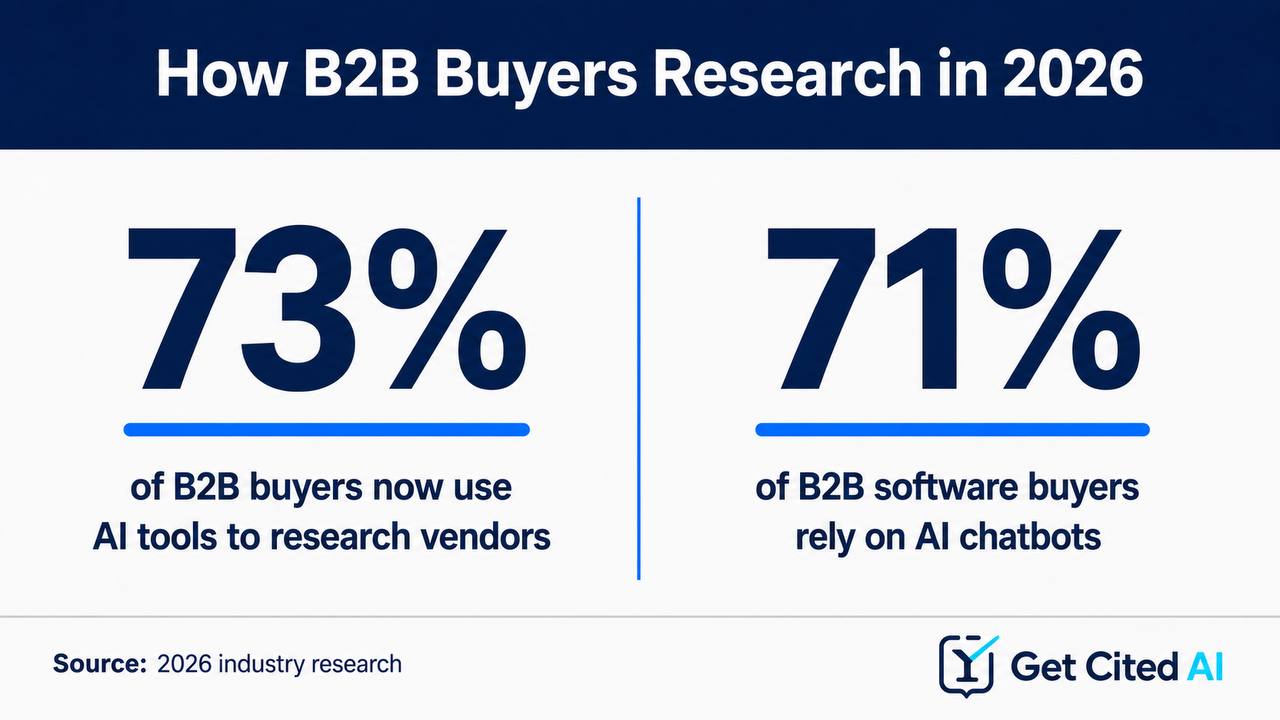
B2B buyer behavior is changing fast. The citation gap is not theoretical. It is already visible in how AI-driven pages win or lose clicks.
These are not small differences. A 67 percent drop in clicks is not a slump. It is a structural loss of visibility. A 120 percent gain for cited brands means they are not just holding their ground. They are pulling ahead of competitors who share the same search page.
The gap between cited and non-cited businesses is widening, and it compounds over time. Forrester documented the 80 percent buying-journey shift in 2026, and Seer Interactive documented the click impact across millions of queries. Last verified June 2026.
Why Are Buyers Using AI to Research Vendors Instead of Searching Google?
Because AI gives them a complete answer in seconds instead of a list of links to sort through.
When a procurement manager searches for outsourced customer service vendors, Google returns links, ads, and a lot of work. The buyer still has to click each site, compare pages, read case studies, and form a view.
When the same buyer asks ChatGPT or Perplexity the same question, they get a synthesized response. The AI has already read the websites, reviews, case studies, and editorial coverage it can access. It gives back a short list with a summary of each option. The buyer reads it in two minutes and starts forming their shortlist.
Buyers have not gotten lazier. They have gotten better tools. The research that used to take an afternoon now takes two minutes.
The Seer Interactive research found that AI Overviews-present search pages were creating a two-tier result. Cited brands gained. Non-cited brands lost. Both outcomes accelerated through 2025. In Q1 2026, cited brands saw early stabilization. For non-cited brands, the pressure did not reverse. Last verified June 2026.
If you want the signal-level explanation behind those outcomes, read how AI tools decide which businesses to recommend.
What Happens to Businesses That Are Not Cited by AI?
They are bypassed before the buyer forms an intent to click.
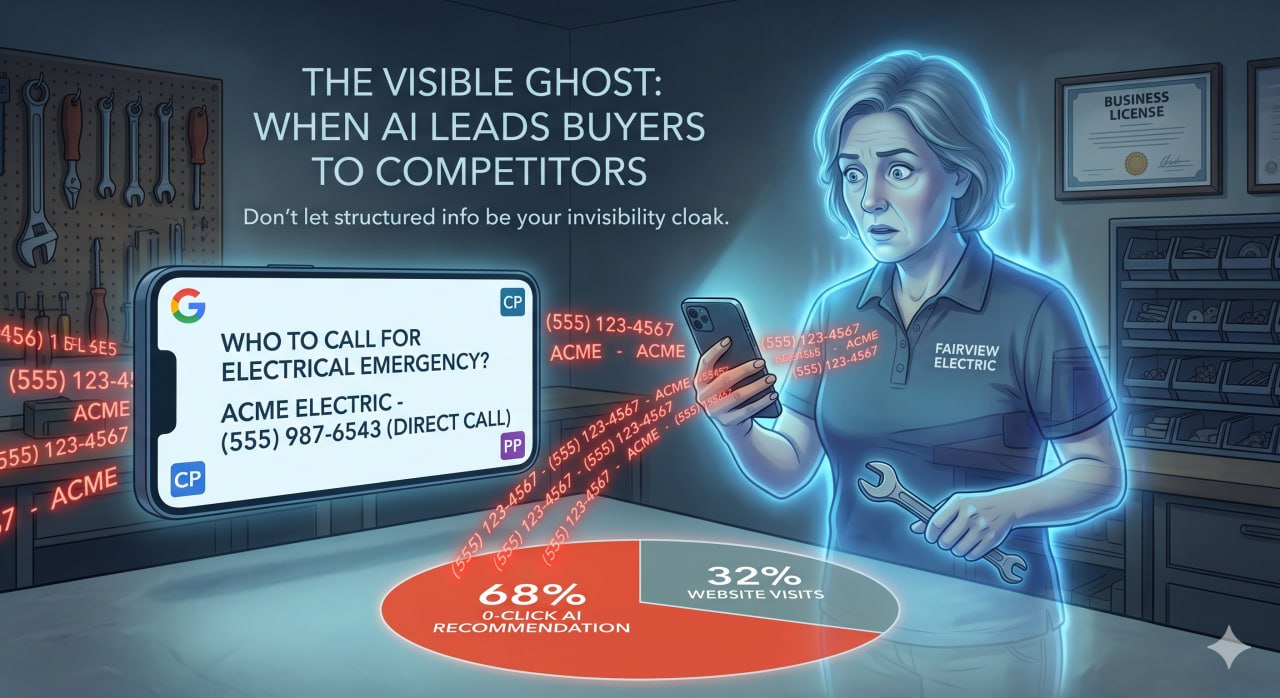
This is the key distinction. Non-cited businesses are not simply ranking lower in search results. They are being removed from consideration before the buyer ever looks at a search result page. The shortlist is formed in the AI response. If you are not named there, you are not competing.
The research puts it plainly: low-credibility vendors do not rank lower. They get bypassed at the research stage entirely.
AI tools synthesize what they can find and trust about a business. They read case studies, editorial coverage, third-party citations, reviews, and structured data. When a business has strong, consistent, machine-readable credibility signals across the web, AI includes it. When a business is hard to read, verify, or corroborate, AI skips it.
The buyer never sees an invisible business. They never know to ask about it. The sale is lost before the sales process begins.
What Signals Do AI Tools Use to Decide Which Businesses to Cite?
AI tools build credibility from the same sources human buyers use, but faster and at scale.
When ChatGPT or Perplexity assembles a vendor recommendation, it is not guessing. It is reading available web data and forming a trust assessment.
- Named case studies with measurable outcomes. Specific results are easier for AI to trust and repeat than generic claims.
- Third-party editorial coverage. Mentions from trusted publications help confirm that the business is real and notable.
- Verified reviews on trusted platforms. AI tools look for corroboration, not just what your website says about itself.
- Consistent structured data. Schema, service definitions, and clear business identity help AI understand what you do, who you serve, and where you operate.
- Visible human expertise. Author identity and real operator knowledge help AI trust the content behind the recommendation.
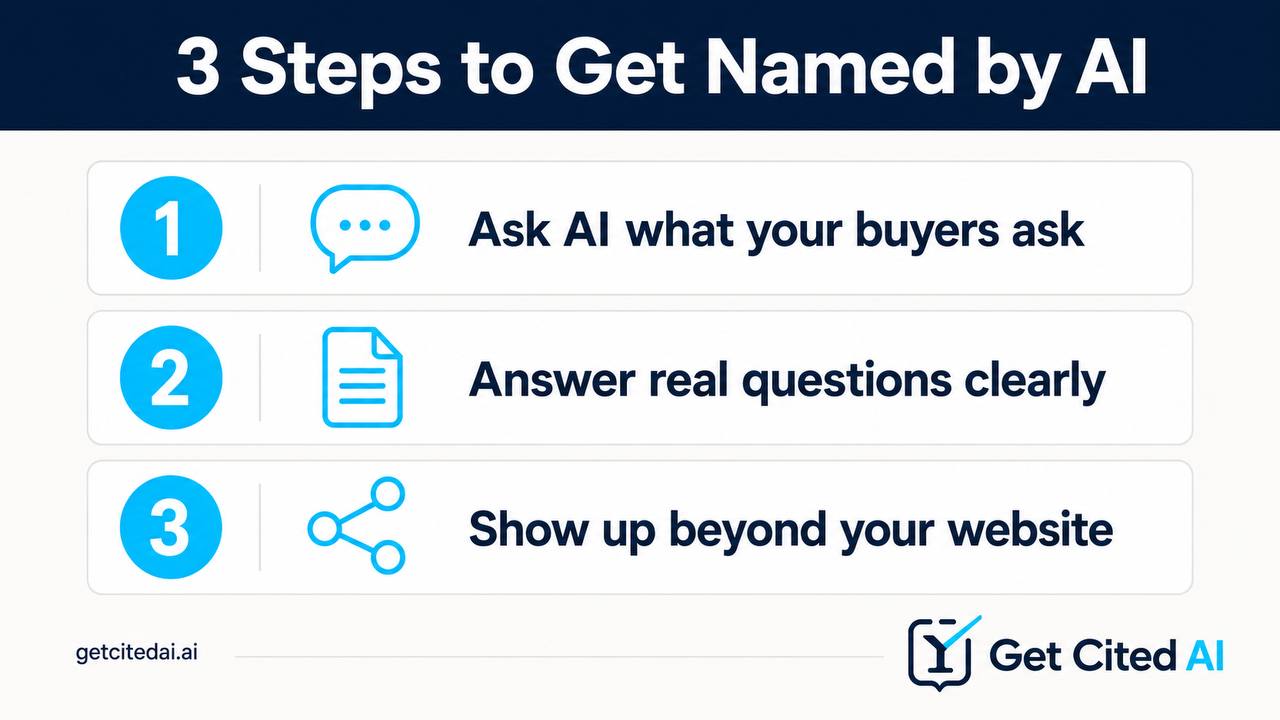
AI citation is usually earned through a small set of visible, repeatable trust signals rather than a single ranking trick.
This is why AI citation is different from traditional SEO. SEO helped businesses rank in a list of links. AI citation helps businesses get named inside the answer itself. This is the foundation of answer engine optimization: structuring your business so AI tools can read, trust, and repeat what you do.
If you want a practical next-step worksheet, use the AI visibility checklist.
How Long Does It Take to Get Cited by AI Tools After Taking Action?
Timeline depends on your starting point, but movement is measurable within 30 to 90 days.
For businesses starting from zero, a fully installed AI signal pack, including structured data files, schema markup, and trust signals, can begin influencing AI responses within 30 days of correct installation and indexing.
Broader credibility signals like editorial coverage and third-party review profiles take longer. A full citation presence built from scratch typically shows measurable progress in three to six months according to industry practitioners.
The most important thing to understand is that this is not a one-time fix. AI models update their knowledge continuously. A business that stays active, consistent, and structured in its online presence will maintain and build its citation presence over time. A business that installs once and stops will gradually lose ground as competitors build theirs.
If you want to see the starting point first, here is how to run your AI visibility check.
Is AI Citation Only a B2B Issue or Does It Affect Local Businesses Too?
It affects every business that depends on being found by buyers online.
The Forrester and Seer Interactive research focused on B2B buyers, but the mechanism applies equally to local service businesses. When someone asks ChatGPT "best dentist in Plano" or "who fixes HVAC in McKinney," the same citation logic applies. AI tools look for structured, trustworthy signals about local businesses. They check review platforms, local business schema, citation consistency, and editorial mentions.
Local businesses face an additional challenge. Most of them have not thought about AI visibility at all. Their competitors probably have not either. That means the local business that acts first can claim a significant advantage before the rest of the market catches up.
The buyer behavior shift is not limited to enterprise procurement. It is happening at every level of the market, from home services to professional practices to retail.
What Questions Do Business Owners Ask About AI Citation and Buyer Research?
What does it mean that 80 percent of the buying journey happens before buyer contact?
It means buyers complete most of their research and shortlisting before ever speaking to a vendor. According to Forrester research covering 18,000 buyers in 2026, AI tools now handle the early research phase. By the time a buyer reaches out, their vendor list is largely set.
Why did my website traffic drop even though I still rank in Google?
Brands not cited in AI Overviews saw organic click-through rates drop 67 percent in 2025, according to Seer Interactive research covering 5.47 million queries. Ranking in Google no longer guarantees clicks if AI tools are answering the buyer's question without sending them to your site.
What is an AI citation and why does it matter for small businesses?
An AI citation happens when a tool like ChatGPT, Perplexity, or Google AI Overviews names your business in a response to a buyer's question. It matters because cited businesses earn 120 percent more clicks than uncited competitors on the same search page, according to Seer Interactive's 2026 research.
How is AI citation different from traditional SEO?
Traditional SEO focuses on ranking in a list of links. AI citation requires your business to be structured so AI engines can read, understand, and trust it enough to recommend it. The signals are different: structured data files, machine-readable authority indicators, review platform presence, and corroborated third-party mentions.
What do AI tools look at when deciding which businesses to recommend?
AI tools synthesize credibility signals from across the web. They weigh case studies with specific outcomes, third-party editorial coverage, verified reviews on trusted platforms, structured data markup, and consistent identity signals that confirm the business is real and authoritative in its category.
Is AI citation relevant for local service businesses or just B2B companies?
It applies to any business that relies on being found online. When someone asks ChatGPT or Perplexity for a local service recommendation, the same citation logic applies. Local businesses that structure their online presence for AI trust signals will show up. Those that do not will be skipped.
How do I find out if AI tools are currently citing my business?
Run a free AI visibility check at getcitedai.ai. Enter your domain and see whether AI tools can find, read, and trust your business. The check takes under a minute and identifies the specific gaps holding your visibility back.
What is the fastest way to improve AI citation for my business?
Install structured AI signal files on your website. These include llms.txt, schema markup, and trust identity files that tell AI tools exactly what your business does, who you serve, and why you are credible. Get Cited AI builds and installs these files for businesses that want a done-for-you solution.
TL;DR
80% of buyers decide before they call anyone. AI tools are making those decisions for them. Businesses cited by AI earn 120% more clicks. Businesses not cited lost 67% of their clicks in 2025. The fix is a structured AI visibility presence, not more social media posts.
Final Thoughts: What Should You Do Next?
The 80 percent finding is not a projection. It is the current reality documented by 18,000 buyers.
Businesses cited by AI earn 120 percent more clicks than competitors on the same page. Businesses not cited saw clicks drop 67 percent in 2025. The gap is real, it is growing, and it is compounding in favor of the businesses that act.
Three things you can do right now:
- Run your free AI visibility check at getcitedai.ai to see where you stand today.
- Audit how your business appears in ChatGPT, Perplexity, and Google AI Overviews by searching the way a buyer would.
- If AI tools cannot find or cite your business, structured credibility signals are the fix, not more blog posts or social media posts.
Start with the free AI visibility check at Run My AI Visibility Check. It takes about a minute and shows you exactly where you stand.
About the Author
Mark Toney is the founder and CEO of Luce Media. He specializes in fractional CMO strategy and AI search visibility and has more than 11 years of experience helping B2B companies build marketing systems that generate measurable revenue.
He has documented $4.21M in attributable revenue results for clients across healthcare, manufacturing, print, and professional services. You can learn more about him on the Get Cited AI about page.