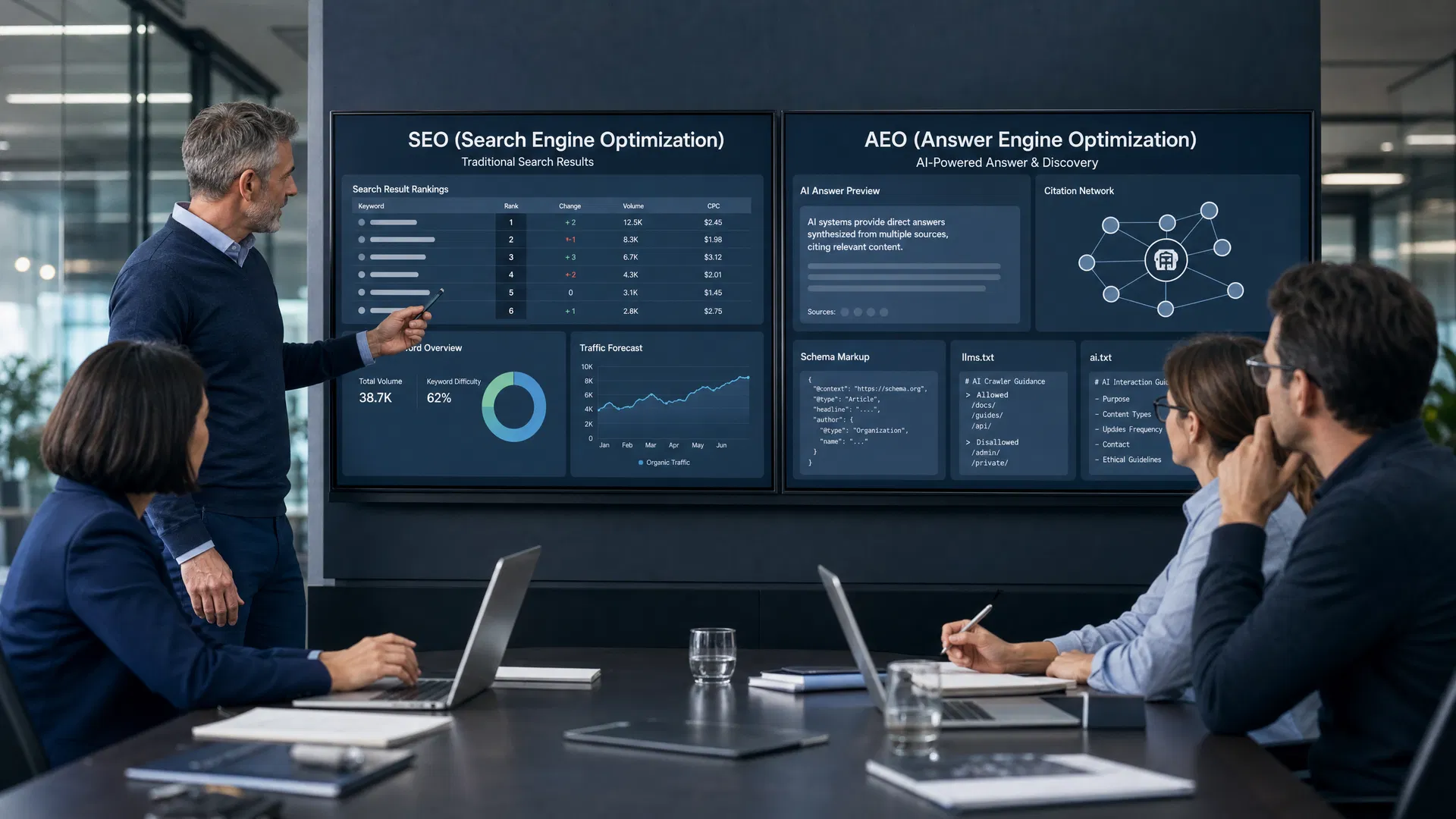

Buyers used to type a question into Google and get a list of ten links. They would scroll through, click a few, and eventually find what they needed. That process is changing.
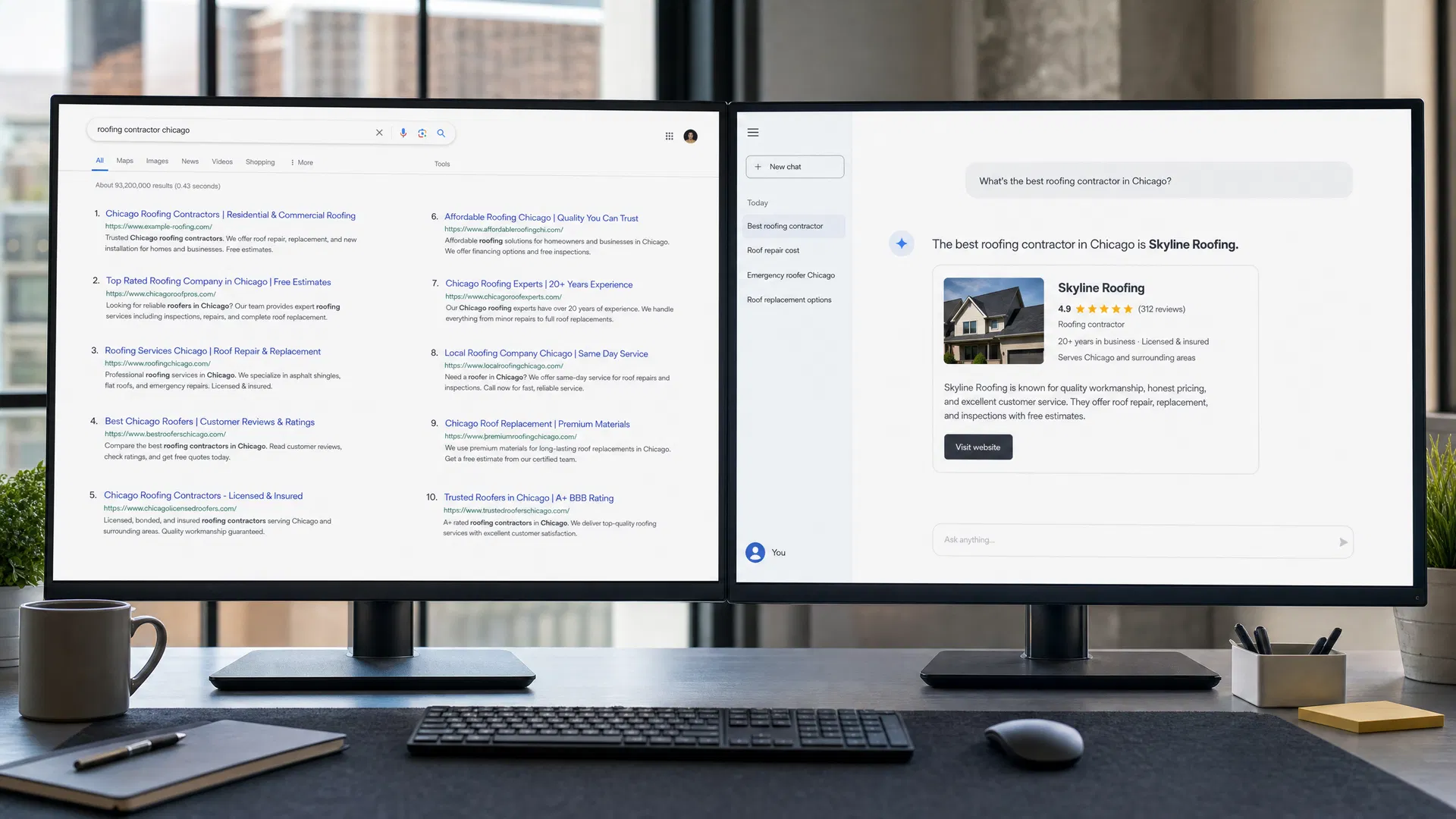
More and more, buyers are skipping the list entirely. They open ChatGPT, Perplexity, Claude, Gemini, or Microsoft Copilot and ask a direct question: who is the best accountant near me, which marketing agency should I call, or what is the top-rated urgent care in Dallas. The AI returns one answer. Not ten. One.
Definition and context
AI visibility is whether AI tools like ChatGPT, Perplexity, Claude, Gemini, and Microsoft Copilot can find, read, and name your business when a buyer asks who to call. A business with strong AI visibility gets named in the AI's answer. One without it does not appear at all, even if it ranks well on Google.
If your business is not structured for AI to find, read, and trust, you are not in that answer. You may not even know you are missing it. That is the gap Get Cited AI was built to fill.
Key Takeaways
- AI visibility is whether AI tools like ChatGPT and Perplexity can find, understand, and name your business when a buyer asks.
- This is a different problem from SEO. Google returns a list of links. AI returns one confident answer.
- Most businesses have not done anything to prepare for AI search, which means the businesses that do are getting named right now.
- AI visibility does not require rebuilding your website. It requires adding specific machine-readable files that AI systems can read.
- You can check your current AI visibility for free at getcitedai.ai. It takes about 60 seconds.
Jump to a section
The Problem Most Businesses Do Not Know They Have
There is a version of your business that AI can name when a buyer asks who to call. And there is a version it cannot find at all. Most businesses right now are the second version, and they have no idea.
Google search has dominated buyer behavior for two decades. Businesses invested in websites, blog posts, SEO strategies, and backlinks because Google rewarded them for it. That work still matters. But it does not solve the new problem.
When a buyer asks an AI tool for a recommendation, the AI is not crawling your website the way Google does. It is looking for something different: structured signals that tell it exactly what your business does, who you serve, where you are, and why you are credible. If those signals are missing or unclear, the AI either skips your business or picks someone else.
The buyer moves on. You never know the conversation happened. If you want to know where you stand right now, you can run a free AI visibility check.
Why AI Visibility Matters More Than Most Business Owners Realize
The shift in AI search visibility is not a future trend. It is already part of how buyers research options. People are using AI tools to narrow vendors, compare providers, and decide who sounds trustworthy before they ever click through to a website.
Google ranking and AI answers are separate systems. On Google, showing up on page one means you are one of many options. In AI search, showing up means you are the answer the tool feels confident naming. There is no comfortable middle ground in that exchange.
This is why AI visibility matters for local service businesses, professional services firms, and B2B companies alike. The businesses that prepare for this now will be the ones getting named six months from now. The ones that wait will be explaining to their teams why the phone got quieter.
What Most Businesses Miss About How AI Actually Works
Most business owners assume that if they have a website and a Google Business Profile, AI can find them. That assumption is wrong.
AI tools like ChatGPT and Perplexity do not search the web the way Google does. They work from training data, indexed content, and structured signals. They are looking for machine-readable files that tell them what a business is, what it does, and why it should be trusted. These files do not exist by default on most websites.
Why llms.txt Matters for Your Business
The most important of these files is the llms.txt file, a plain-language instruction file placed on your website that tells AI tools exactly what your business does, who it serves, and why it should be trusted. Think of it as leaving the lights on for AI. Without it, the AI walks past your door in the dark.
AEO, or Answer Engine Optimization, is the practice of structuring your online presence so you can appear in AI-generated answers. Schema markup is structured data code added to a website that helps both search engines and AI systems understand your category, location, services, and identity. There are also structured data files, identity signals, and AI crawler permissions that factor into whether a business gets cited.
How discovery works
Google Search
Google usually returns a page of links, maps, snippets, and ads that the buyer still has to sort through.
AI Search
AI tools usually compress that journey into one synthesized answer or a short list of cited recommendations.
What the buyer sees
Google Search
Ten links and several competing options.
AI Search
One strong recommendation or a very short answer set.
What the engine needs
Google Search
Crawlable pages, keyword relevance, authority signals, and click-worthy snippets.
AI Search
Direct answers, llms.txt, schema markup, clean identity data, and extractable content blocks.
What businesses optimize for
Google Search
Rankings, traffic, and click-through rates.
AI Search
Being understood, trusted, and named in the answer itself.
What success looks like
Google Search
A buyer clicks your result and continues researching.
AI Search
The AI names your business before the buyer ever reaches a list of alternatives.
| Comparison point | Google Search | AI Search |
|---|---|---|
| How discovery works | Google usually returns a page of links, maps, snippets, and ads that the buyer still has to sort through. | AI tools usually compress that journey into one synthesized answer or a short list of cited recommendations. |
| What the buyer sees | Ten links and several competing options. | One strong recommendation or a very short answer set. |
| What the engine needs | Crawlable pages, keyword relevance, authority signals, and click-worthy snippets. | Direct answers, llms.txt, schema markup, clean identity data, and extractable content blocks. |
| What businesses optimize for | Rankings, traffic, and click-through rates. | Being understood, trusted, and named in the answer itself. |
| What success looks like | A buyer clicks your result and continues researching. | The AI names your business before the buyer ever reaches a list of alternatives. |
What we see in practice
When we run an AI visibility check on a typical local business website, we usually find some version of the same problem: no llms.txt file, weak schema, or crawler settings that make AI tools hesitate. The business may be doing fine on Google and still be completely absent from AI answers.
The fastest way to find out where you stand is to run the check yourself.
What AI Visibility Looks Like When It Is Working
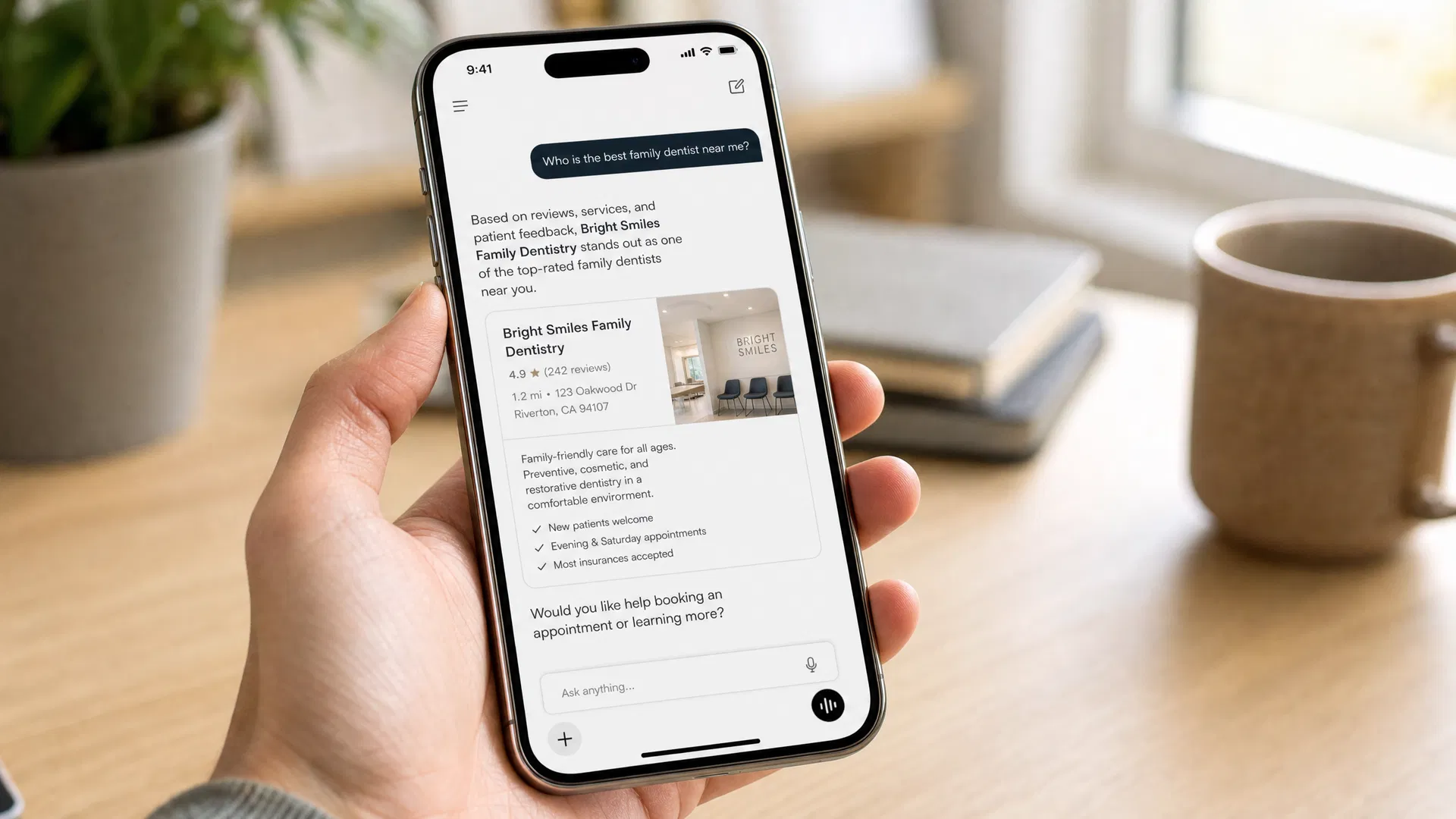
A family dental practice in Plano, Texas adds the right files to their website. Two weeks later, a buyer in their zip code opens Perplexity and types: who is the best family dentist near me in Plano. Perplexity returns a response that names the practice by name, describes what they do, and includes their address. The buyer calls.
That is what AI visibility looks like when it is working. The practice did not run a new ad campaign. They did not rebuild their website. They added a set of specific, structured files that AI systems could read and trust. The result was that AI started naming them.
A business without AI visibility has the opposite experience. A buyer asks the same question. A competitor who prepared for this gets named. The practice never knows the conversation happened.
AI visibility is not a big-brand advantage. In many cases it favors the clearer business, not the bigger one. The difference is not budget. It is not brand awareness. It is whether the right files exist on the site for AI to find and use.
Related terms
llms.txt is the plain-language file that explains your business to AI systems. AEO is the broader practice of shaping your site so those systems can cite and recommend you. Schema markup is the structured code layer that helps machines classify what they are reading correctly.
What AI Needs to Name Your Business
- ✓ An llms.txt file that tells AI tools what your business does, who it serves, and where it operates.
- ✓ Schema markup that clarifies your category, services, location, and identity.
- ✓ Robots.txt settings that allow AI crawlers to read the right pages.
- ✓ Consistent business information across your site and the wider web.
- ✓ Direct-answer content blocks that explain what you do in plain language.
- ✓ Visible trust signals, proof, and expertise markers that reduce ambiguity.
That is the core of the Get Cited AI done-for-you service. For $497, we build and install the files most businesses are missing, usually within 24 hours, without turning it into a technical project on your side.
Questions We Hear Often
What exactly is AI visibility?
AI visibility is whether AI tools like ChatGPT, Perplexity, Claude, Gemini, and Microsoft Copilot can find, read, and name your business when a buyer asks who to call. A business with strong AI visibility gets named. One without it does not appear in the answer at all.
Is AI visibility the same as SEO?
No. SEO helps your website rank in Google search results. AI visibility is a separate problem. AI tools do not return a list of links. They return one confident answer. Getting into that answer requires a different kind of preparation than traditional SEO.
How do I know if AI can find my business right now?
The fastest way is to run a free AI visibility check at getcitedai.ai. Enter your domain and the tool shows you whether AI can currently find and understand your business, and where the specific gaps are. It takes about 60 seconds.
What makes a business visible to AI?
AI tools need specific machine-readable files to identify and trust a business. These include an llms.txt file, structured schema markup, updated robots.txt permissions, and consistent identity signals. Without these, AI systems either skip your business or guess incorrectly about what you do.
Does this matter if I am a local business?
It matters especially for local businesses. When someone asks ChatGPT or Perplexity for a recommendation near them, AI picks one answer. Local businesses structured for AI citation get named. Those that are not may not appear at all, even if they rank well on Google.
How quickly can AI visibility be fixed?
With a done-for-you service, the files are typically built and installed within 24 hours of payment. AI tools begin indexing the new signals from that point forward. There is no waiting period of months the way there is with traditional SEO.
AI visibility vs. local SEO — what is the difference?
Local SEO helps your Google Business Profile and website rank in Google Maps and local search results. AI visibility is about getting named in AI-generated answers on platforms like ChatGPT and Perplexity. They are different channels with different requirements. A business can rank well locally on Google and still be completely invisible to AI.
Is it worth investing in AI visibility if I already have strong SEO?
Yes. Strong SEO does not automatically translate to AI visibility. The files and signals that AI tools need are separate from what Google needs. Many businesses with excellent Google rankings are invisible to AI because they have not added the specific structured files AI systems look for.
Final Thoughts
AI visibility is not a technology topic. It is a business problem. Buyers are asking AI tools who to call, and AI is naming businesses that have prepared for it. The businesses that have not prepared are losing conversations they do not even know are happening.
This is not about chasing the latest trend. It is about understanding where buyers are going and making sure your business is there when they arrive. The buyers are already there. The question is whether your business is.
The buyer who asked ChatGPT who to call did not wait. Neither will the next one.
You can find out where you stand in about two minutes. No signup. No payment required for the check.
Author
About Mark Toney
Mark Toney is the founder of Luce Media and creator of Get Cited AI. He has spent over a decade helping businesses build marketing systems that generate predictable revenue.
About This Post
How we put this guide together
This article reflects what we see when we review real business websites through the Get Cited AI visibility process. It combines direct field observations, practical implementation patterns, and public standards such as Schema.org to explain what AI systems need before they will name a business confidently.