A manufacturer in Ohio with 40 years of production history. A dental practice in Phoenix with 3,000 patients. A commercial HVAC company in Dallas with 15 service trucks. A marketing agency in Atlanta with a solid client roster.
None of them think of themselves as technology companies. And none of them have heard the term AEO.
But all of them have the same problem. The buyers in their markets are increasingly asking AI tools for recommendations before they ever visit a website or pick up a phone. And most of those businesses are not showing up.
The Way Buyers Find You Has Changed
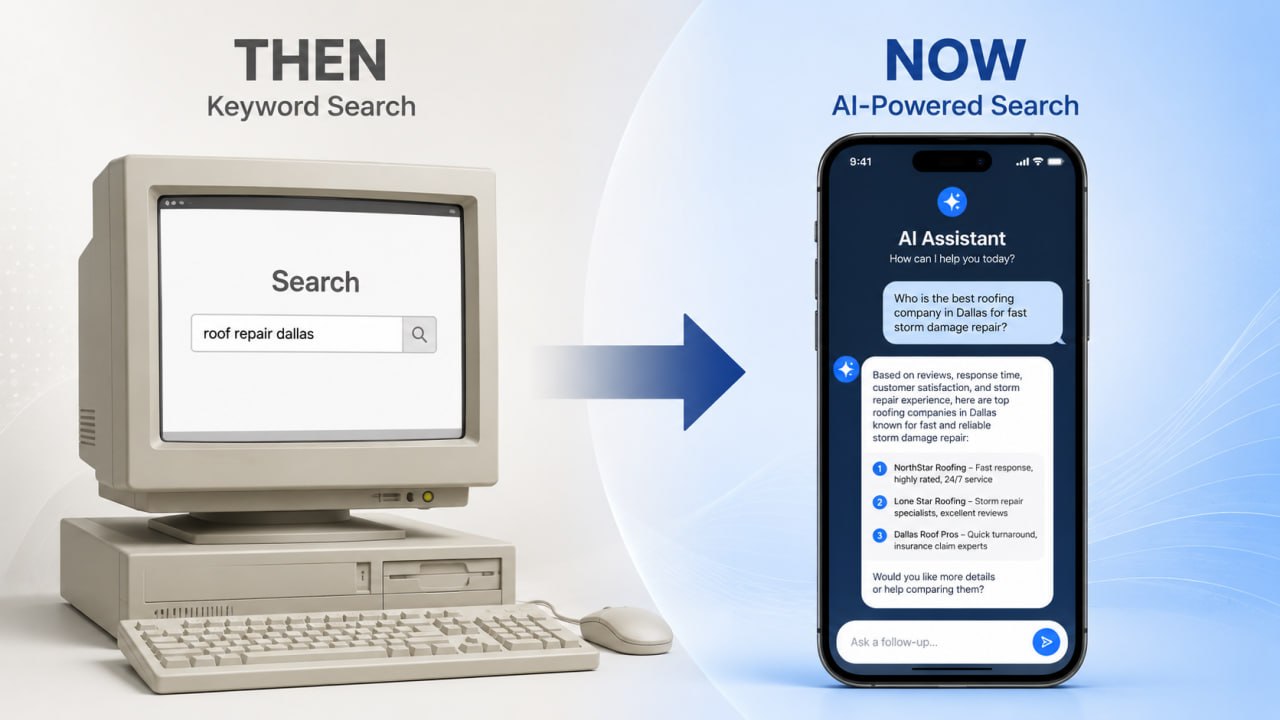
Not long ago, the process was predictable. Someone needed a service. They typed a phrase into Google. They scanned a page of results. They clicked a few links. They made a decision.
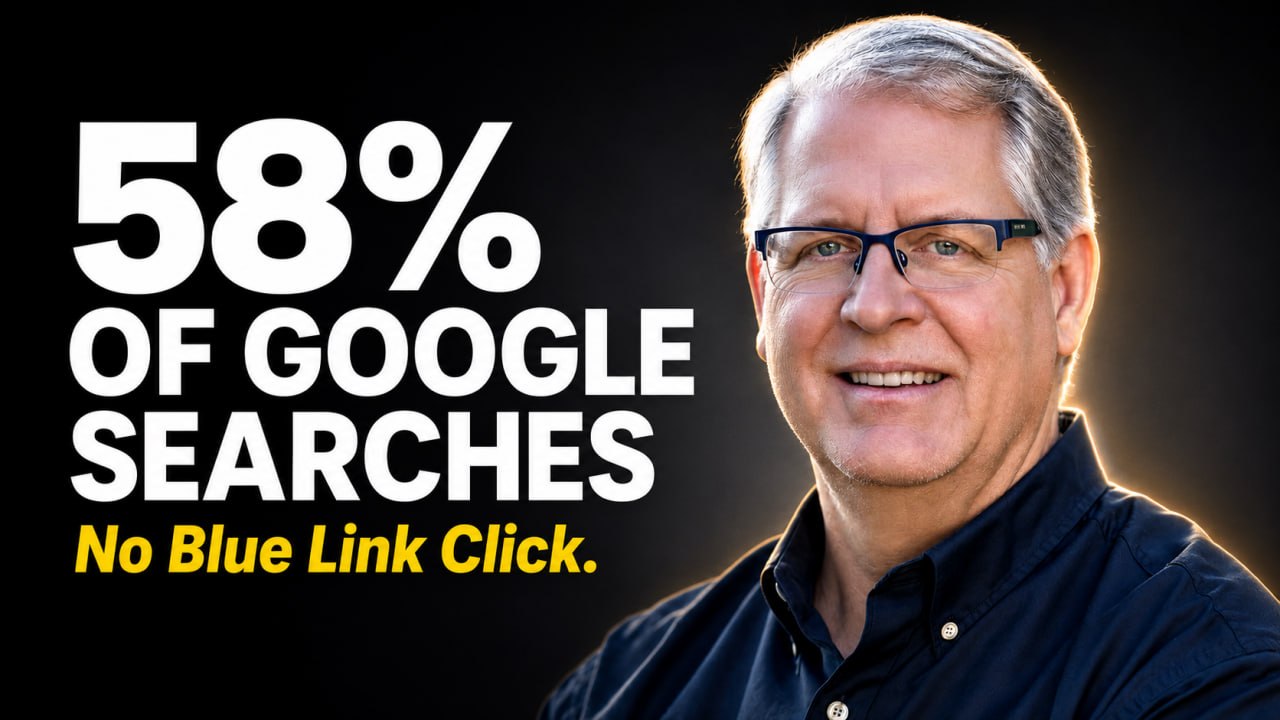
That still happens. But something else is happening at the same time, and it is growing fast.
More buyers are skipping the list entirely. They open ChatGPT, Perplexity, or Gemini and ask a direct question. "Who is the best commercial envelope manufacturer for direct mail companies on the East Coast?" "What is a reliable dental implant clinic in Scottsdale?" "Which fractional marketing firm handles B2B companies in the 5 to 50 million revenue range?"
The AI does not return a list of ten options. It names one. Maybe two. It answers with confidence, as if it already knows who you should call.
If your business is structured in a way that AI can read and understand, your name has a chance of appearing. If it is not, someone else gets the mention. Every time.
This is the problem Answer Engine Optimization exists to solve. It is not a trend. It is not a technology issue. It is a business visibility issue, and it is affecting every industry right now.
What AEO Actually Means
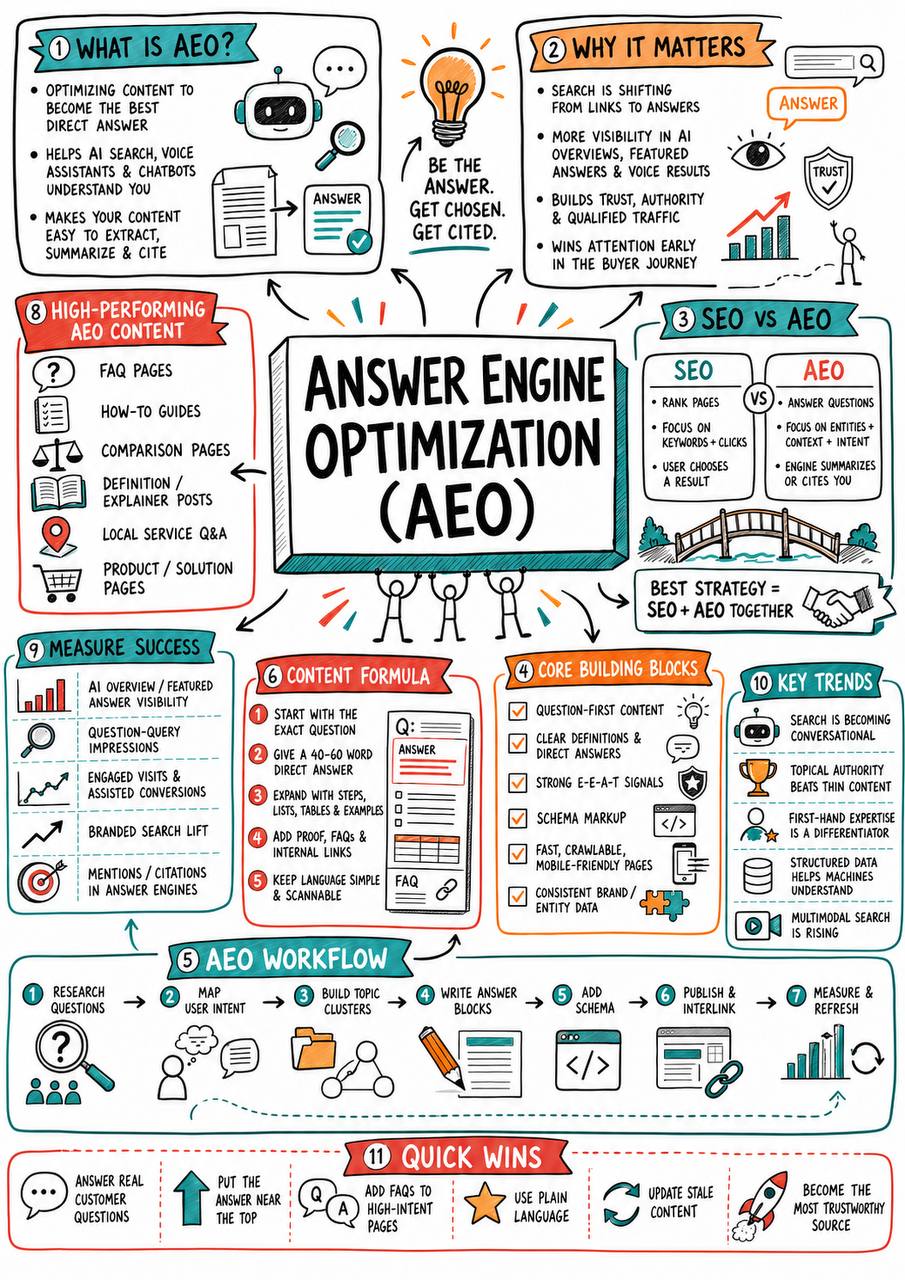
AEO stands for Answer Engine Optimization. The term describes the work of preparing your website so that AI systems can find it, understand what your business does, trust what they find, and recommend you when a buyer asks a relevant question.
Most business owners assume their website is doing this already. It is not. A website can rank well in Google and still be nearly invisible to AI tools. The signals are different. The files are different. The structure is different.
SEO and AEO are related but they are not the same discipline.
SEO is built around keywords, backlinks, and content that Google's algorithm rewards. It gets your website to appear in a list of results. AEO is built around machine-readable files, structured data, and clear positioning that AI systems use to verify and interpret a business. It gets your business named as the answer.
A well-optimized website for Google is not automatically a well-optimized website for AI. And as the share of buyer searches moving to AI continues to grow, that gap matters more with every passing month.

The businesses that close this gap now will be the ones AI names six months from now. The ones that wait will spend that time wondering why their qualified pipeline slowed down even though their Google rankings held steady.
Six Things AI Uses to Decide Whether to Name Your Business
There are six areas where your website either earns AI recommendations or loses them. They apply to every industry. None of them require a new website or a complete rebuild.
The first is category clarity. AI cannot recommend you if it does not clearly understand what category your business belongs to. Vague messaging like "we help businesses grow" gives AI nothing to work with. Specific messaging like "commercial printing and direct mail fulfillment for financial institutions and nonprofits" gives AI exactly what it needs to match you to a buyer's question. Most business websites are far too vague on this point.
The second is audience and use-case definition. AI does not just match businesses. It matches context. Your website needs to communicate clearly who you serve and what situation triggers the need for your service. The more specific this is, the more likely AI is to name you for the right query at the right moment.
The third is content structured for extraction. AI does not read your website the way a human does. It scans, extracts, and summarizes. Long paragraphs without headers get passed over. Pages built with clear headings, short paragraphs, bullet-point summaries, and defined sections give AI exactly what it needs to pull relevant information and present it to a buyer.
The fourth is trust signals. AI favors businesses it can verify. Reviews, certifications, years in business, named clients, and media mentions all contribute to whether AI treats your website as a credible source. A business that claims experience without demonstrating it is less likely to be cited.
The fifth is comparison and evaluation content. AI frequently answers questions like "who are the best providers in this category" or "what is the difference between option A and option B." If your website does not help AI compare you to alternatives, AI has to find that information somewhere else. And somewhere else usually means a competitor's site or an industry publication that may not represent you accurately.
The sixth is technical machine-readable files. This is the area most business owners do not know about at all. Files like llms.txt, ai.json, JSON-LD schema markup, and a properly configured sitemap.xml are the signals AI systems use at a technical level to verify your business and understand what you do. Most business websites are missing several of these files entirely. Some are missing all of them.
The fastest way to know where you stand is to run the check yourself.
Run a Free AI Visibility Check Now
What Fixing This Actually Looks Like
The good news is that AEO improvements do not require starting over.
The core work involves rewriting the key pages on your existing site so your category, audience, and value are stated clearly and specifically. It involves adding structured sections to your service and product pages so AI can extract information efficiently. It involves creating content that answers the questions buyers are already asking AI in your industry. And it involves adding the technical files that AI systems use to verify and trust your business.
For most businesses, none of this requires a developer overhaul. The rewrites are content-level changes. The technical files are additions to your existing site. The comparison and evaluation content can be built out one page at a time.
The businesses that will struggle with this are the ones that continue to describe themselves the way they always have. Vague. Generalist. Modest about specifics. AI does not reward modesty. It rewards clarity.
The businesses that will benefit are the ones willing to be specific. About who they serve. About what they do. About how they compare to alternatives. About the situations where they are the right choice and the situations where they are not.
That level of specificity is what AI reads as credibility.
Questions We Hear Often
My business is not in tech. Does AEO still apply to me?
Yes, directly. AEO applies to any business that wants to be found and recommended by AI tools. Manufacturers, service providers, healthcare practices, local businesses, and agencies all face the same gap. If buyers in your industry are using AI to search for providers, your visibility in those answers is a business issue, not a technical one.
We already invested in our website. Do we have to redo everything?
No. AEO improvements are built on top of your existing site. The work is additive, not a replacement. You add the technical files AI systems need, restructure key pages for clarity, and build content that AI can extract. The design, the domain, and the structure you already have stay in place.
How does AI decide who to recommend?
AI systems evaluate several signals at once. They check whether your website clearly defines your category and audience. They check whether the content is structured for extraction, with clear headings and defined sections. They look for trust signals like reviews and certifications. And they check for technical machine-readable files that confirm your business identity and services. Missing any of these reduces your chances of being named.
What is the fastest way to see where we stand?
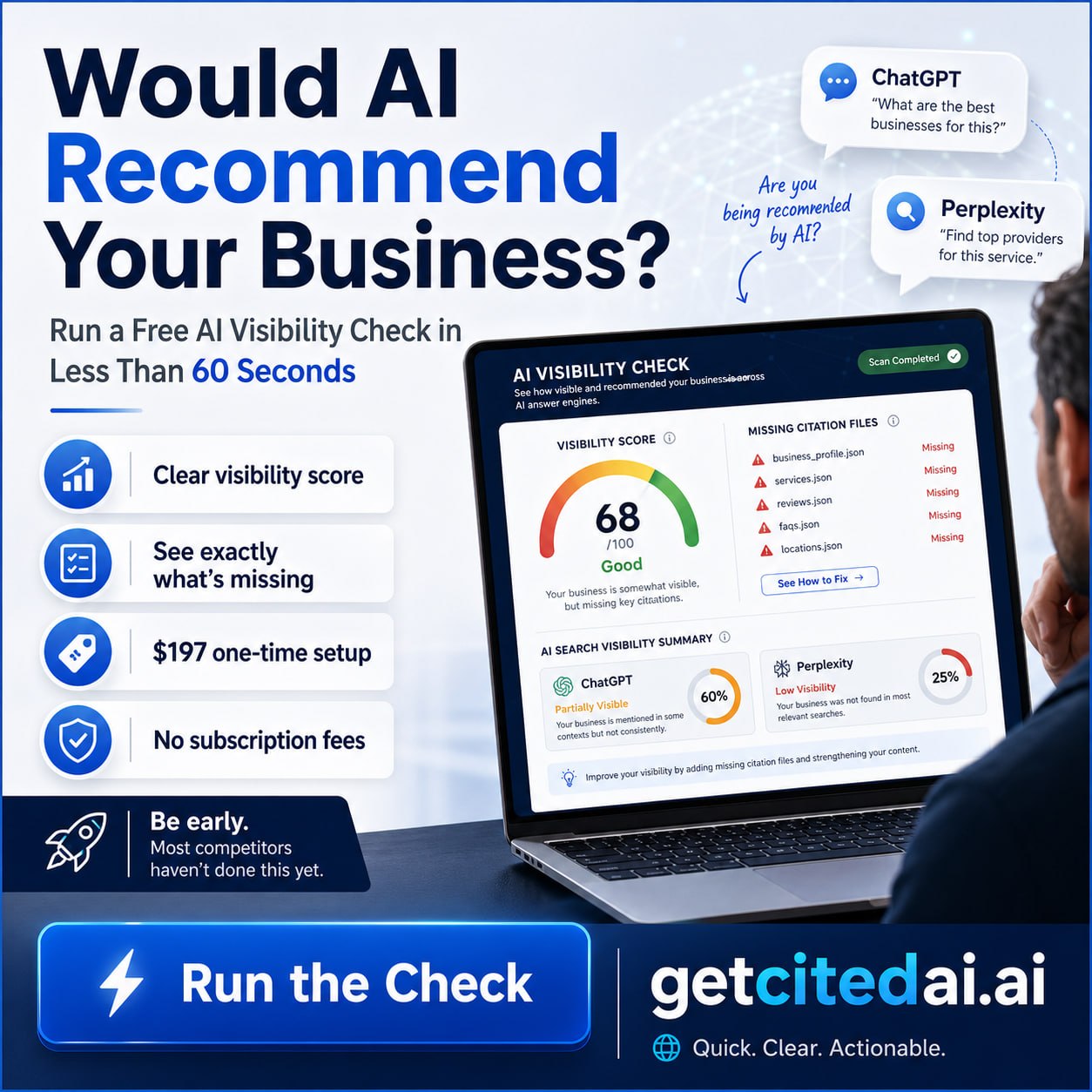
Run a free AI visibility check at getcitedai.ai. It audits your website, tests how ChatGPT and Gemini respond to queries in your category, and gives you a score with a plain-English explanation of what is helping and what is hurting your visibility.
Is this something we can fix internally or do we need help?
It depends on your team. The content and structural changes can often be handled internally if you have someone comfortable with web content. The technical files are a different matter. They require specific knowledge of AI-readable file formats and how to install them correctly. Many businesses choose to have those built and verified by a service that specializes in this work.
How long before fixing this makes a difference?
AI systems begin reading new files and updated content within days of the changes going live. How quickly that translates to visibility in AI answers depends on how competitive your category is and how much ground you are making up. For most businesses, meaningful improvement happens within a few weeks of the core fixes being in place.
The buyers in your market are not waiting for you to figure this out. They are asking AI for recommendations right now. Some of those queries are in categories where your business should be named. Whether you are actually named depends on what your website gives AI to work with.
AEO is not complicated. But it is specific. It requires clear positioning, structured content, trust signals that AI can verify, and the right technical files installed correctly. Every business in every industry can close this gap. Most have not started yet.
That is the window. It will not stay open at this size forever. The businesses that move now will be the ones AI cites consistently six months from now.
You can see exactly where you stand before spending a single dollar. The check takes about two minutes.