
Most B2B companies are still optimizing for yesterday's search behavior while their buyers increasingly ask AI tools for recommendations before they ever visit a website. Predictive SEO and AI visibility work together to close that gap by helping your company publish the right content early and become a business AI systems can confidently verify and cite.
By Mark Toney, Founder — Published: May 4, 2026
Most marketing teams are optimizing for where their buyers were six months ago. They track keyword volumes, review last quarter's search queries, and build content calendars around what performed well in the rear-view mirror. That is a reasonable discipline for a world where search behavior moves slowly. We are not in that world anymore.
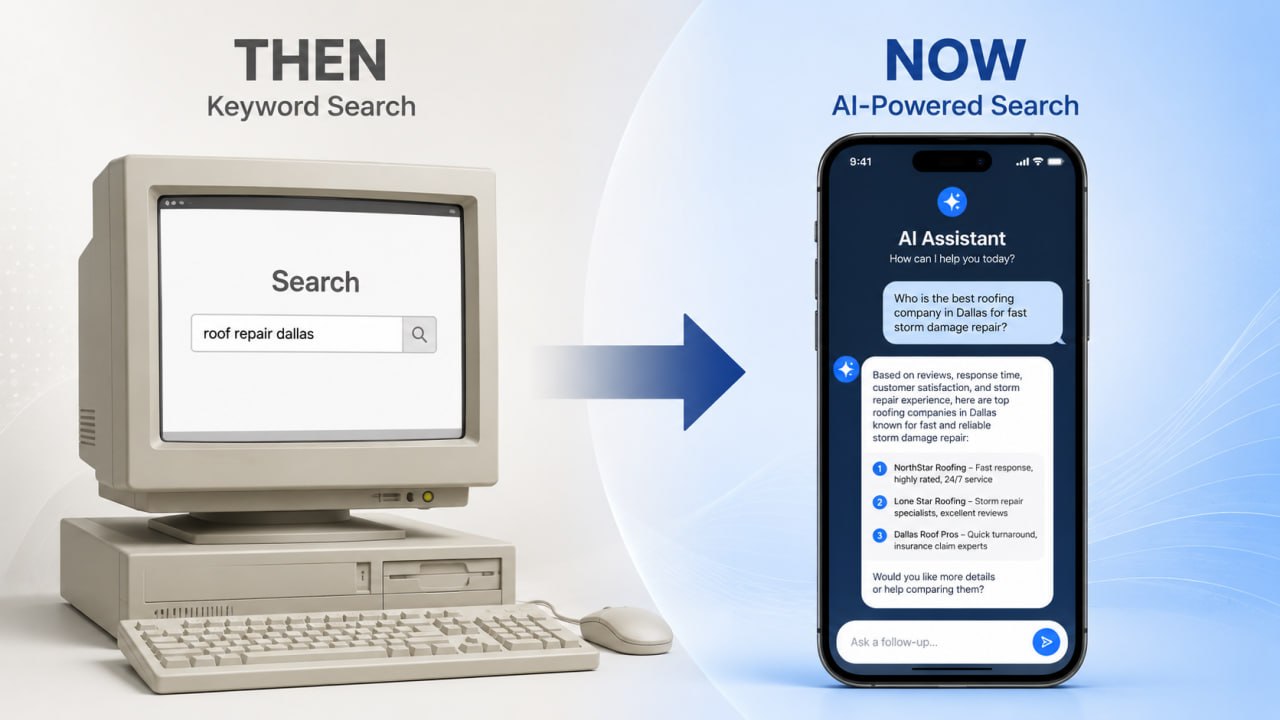
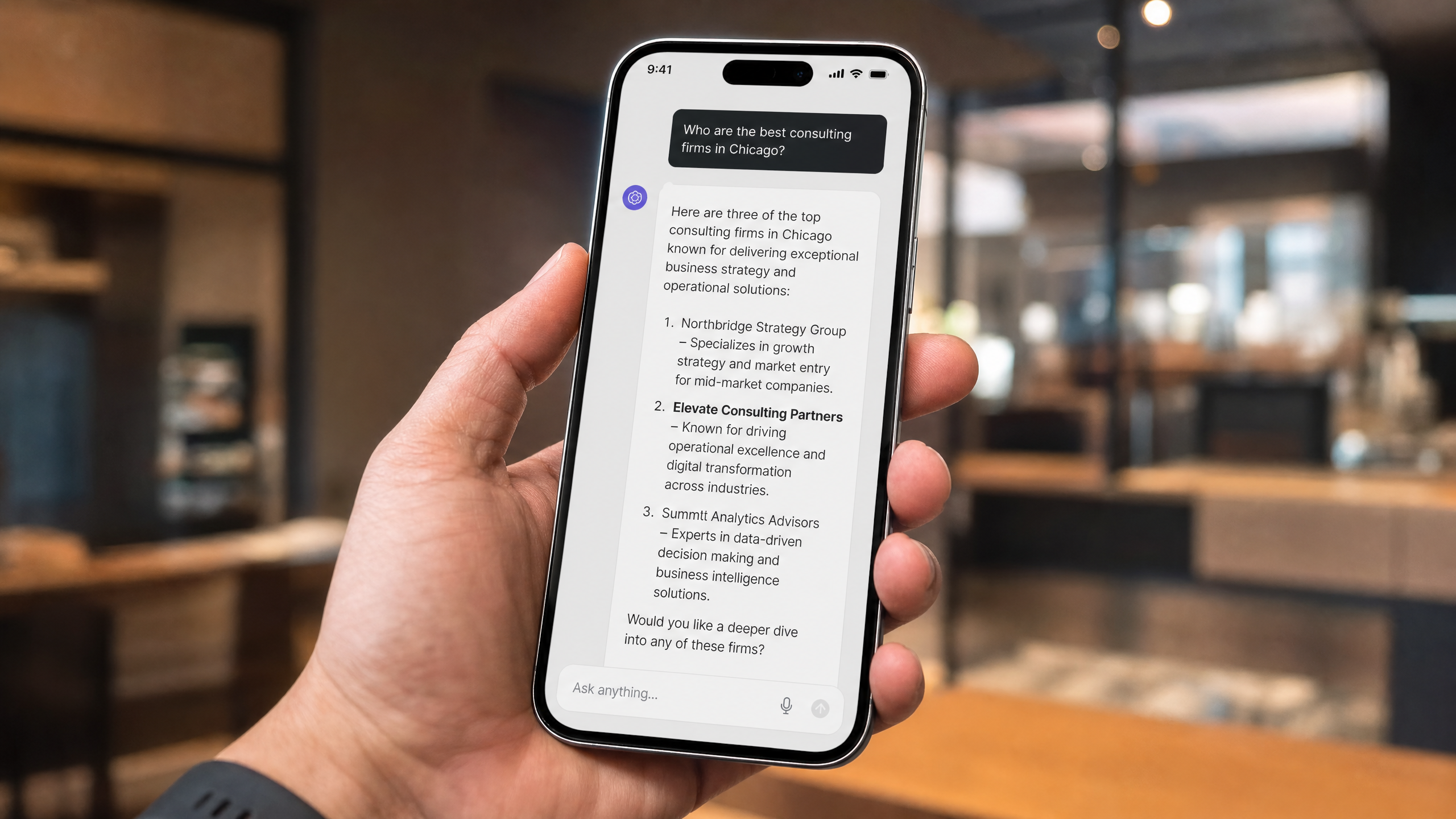
Buyers increasingly skip the Google list entirely. They open ChatGPT or Perplexity, describe what they need, and ask which company they should call. The AI produces one confident answer. Sometimes two. It rarely names five options and lets the buyer decide. That shift alone changes the math on what it means to be visible.
The businesses that understand this are quietly building a meaningful head start. The ones that don't are still celebrating their Google rankings while their buyers ask AI assistants for recommendations and hear other company names.
The Problem With Reacting to Search Data You Already Have
Traditional search engine optimization was built on a feedback loop. You look at what people searched for. You create content around those terms. You track rankings and adjust. Repeat. That loop works reasonably well when the time between a buyer's question and your content appearing is short.
In a long B2B sales cycle, the loop breaks down. The research your buyer does in month one rarely shows up in your analytics until month three. By the time you see a trend in your Search Console data, the buyer who sparked it has already moved on. Some have already shortlisted vendors. Others have already had their first discovery call. Your content strategy, built on that lagging data, is chasing a decision that has largely been made without you.
The technical term for this is a lagging indicator problem. The practical term is: you are spending your content budget on yesterday's questions while your buyers are asking tomorrow's. Predictive SEO exists to close that gap. Instead of asking what did people search for last month, it asks where is the language around this problem heading, and how do we get there before the volume spike arrives.
For most B2B marketing teams, that is a meaningful shift. It requires a different way of reading market signals, a different content planning rhythm, and, crucially, a different way of measuring whether your visibility is actually working.
Why This Gap Costs More Than Traffic
The stakes in B2B are not clicks and impressions. They are shortlists and pipeline. When a senior buyer asks an AI assistant for a recommendation in your category and your company is not named, you did not lose a click. You lost a seat at the table before the conversation even started.
Think about the mechanics of a buying committee. Multiple people are researching independently. The practitioner searches for technical comparisons. The manager asks peers in professional communities. The executive asks an AI assistant what the leading options are in this space. Each of them forms an opinion before they talk to each other. By the time the committee meets to compare notes, the shortlist is largely set.
Companies that showed up consistently across all of those research touchpoints tend to be on it. Companies that showed up in some places but not others often aren't.
This is what makes AI visibility different from traditional search in a B2B context. Missing a Google ranking costs you one possible entry point. Being absent from AI-generated recommendations costs you credibility with the decision-maker level of the buying committee at the moment they're forming their initial opinion. That is a harder position to recover from later in the cycle.
The fastest way to know where your business stands in AI search right now is to run the check yourself.
Run a Free AI Visibility Check Now.
What Most Businesses Miss When They Think About AI Search
Most business owners, when they first hear about AI visibility, assume it is a content problem. If we just publish more, we'll show up. That intuition is understandable but only partially correct. Publishing authoritative, well-structured content matters. But AI systems do not just read your blog posts. They read the underlying architecture of your website.
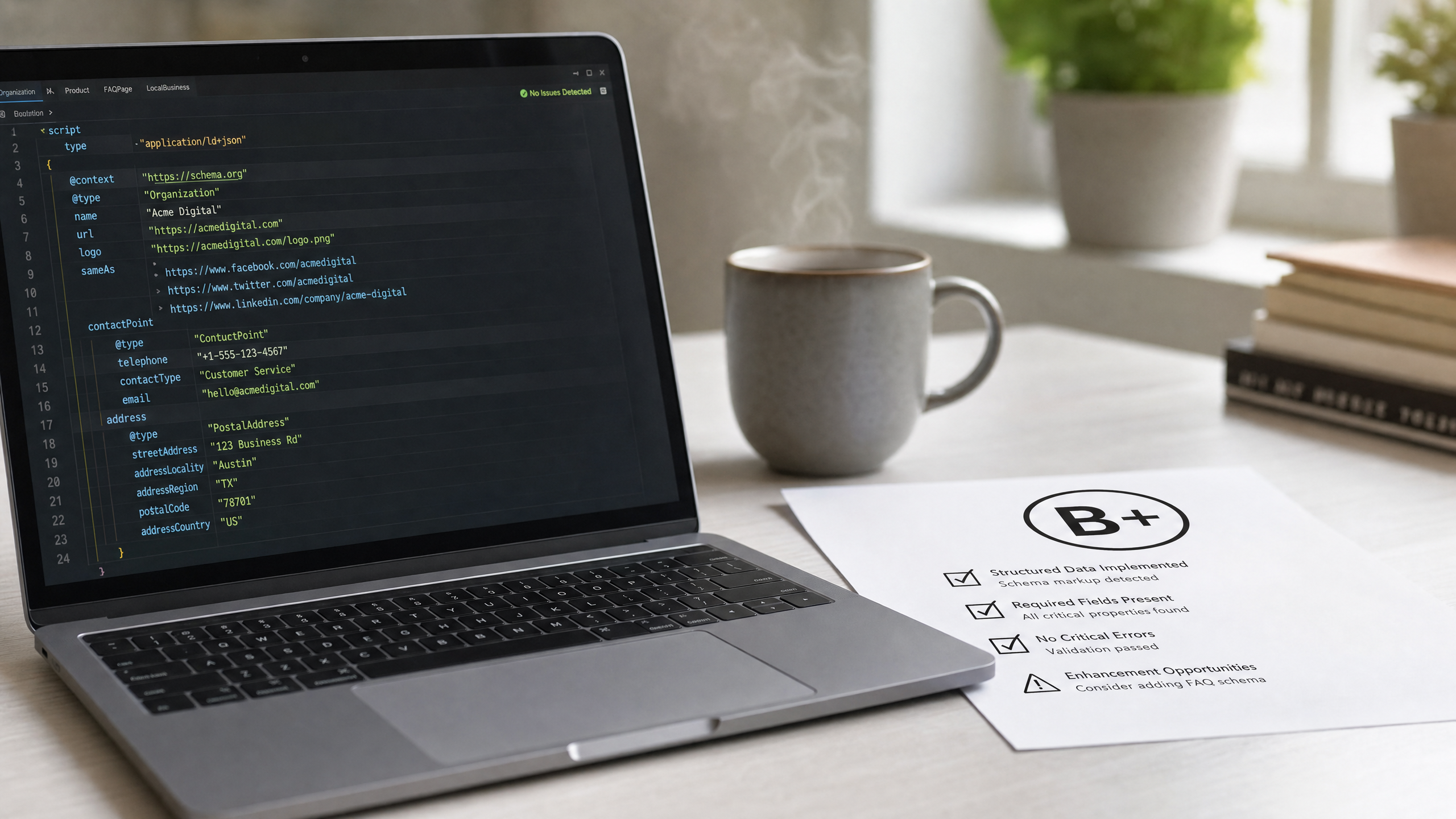
Specifically, they look for machine-readable files and structured data that tell them what your business is, what it does, where it operates, and whether the information on your site is reliable. Files like llms.txt, ai.json, structured schema markup, and properly configured technical signals are how AI systems verify a business before they include it in a recommendation. Most websites are missing most of these. Not because the owners are negligent, but because these files did not exist as a category three years ago and almost no web developer includes them by default.
This is the core of what Get Cited AI addresses. The diagnostic runs a check against your domain and shows you which of these signals are present, which are missing, and which are misconfigured. It then tests your actual citation behavior in ChatGPT and Gemini, checking whether you are named when a buyer asks for a recommendation in your category. The result is a score, a letter grade, and a prioritized action plan in plain language.
This is where predictive SEO and AI visibility connect. Predictive SEO tells you what content to create and when. AI visibility tells you whether the infrastructure supporting that content is trustworthy enough for AI systems to cite you. You need both. Strong content without the right machine-readable signals produces authoritative writing that AI systems cannot fully verify. The right technical signals without strong content produces a well-structured site with nothing worth recommending.
What It Looks Like When You Have Both Working
A business that has both predictive content and strong AI visibility signals tends to show up consistently across the research journey. When a practitioner searches for comparisons, they find detailed, authoritative content from this company. When a manager asks a peer community, the company comes up because their content has been circulated. When the executive asks an AI assistant for a recommendation, the company is named because the AI can verify the business, read its structured data, and find enough credible context to include it with confidence.
The executive in that example does not know how the answer was generated. They do not know what llms.txt is or why schema markup matters. They just see a name they can recognize, and they ask their assistant to find out more. That is the outcome worth building toward. Not a higher position in a ranking report, but a seat in the conversation that happens before the formal sales process starts.
That kind of presence does not happen by accident and it does not happen overnight. It is built through a combination of forward-looking content decisions and the technical groundwork that makes your site legible to the systems your buyers now trust to give them recommendations. The good news is that for most businesses, the technical groundwork is a one-time fix. You address the missing files, install the correct structured data, and verify the signals are working. The content work is ongoing, but it is the same work your team is likely already doing. It just needs to be aimed further ahead.
Questions Business Owners Ask Us
What is the difference between SEO and AI visibility?
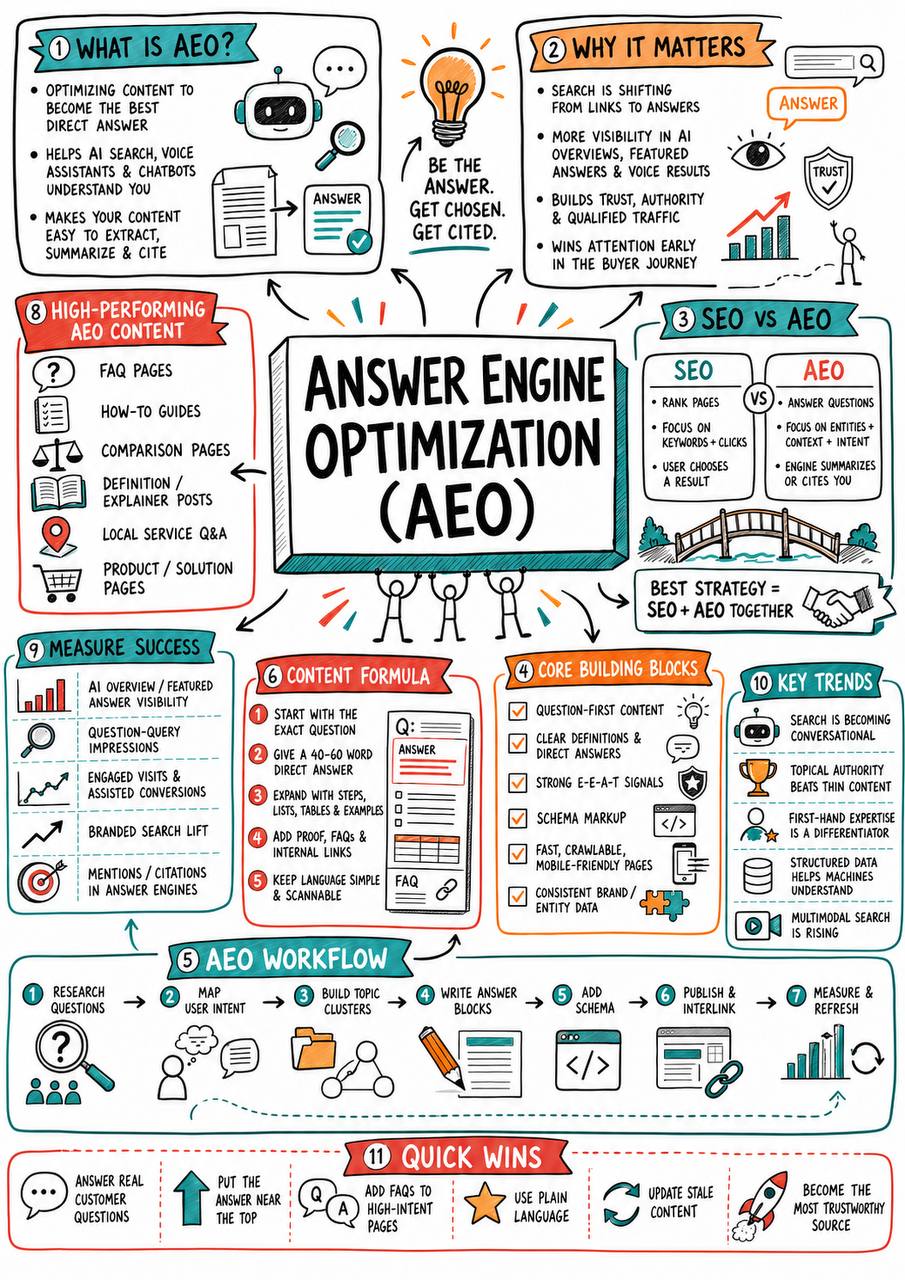
Traditional SEO is about ranking in Google's list of results. AI visibility is about whether tools like ChatGPT, Gemini, and Perplexity name your business when someone asks them for a recommendation. They are different problems that require different fixes. Most businesses have worked on the first one and ignored the second entirely.
How do I know if AI tools can find my business?
The fastest way is to run a free AI Visibility Check at getcitedai.ai. You enter your domain and the tool analyzes what AI systems can read, trust, and verify about your business. You get a score, a letter grade, and a plain-English explanation of where the gaps are.
What is predictive SEO and how does it relate to AI search?
Predictive SEO is the practice of creating content around the language your buyers are moving toward, not just the keywords that were popular last quarter. It matters for AI search because AI systems draw from the most authoritative, well-structured sources available. If your content addresses future questions before your competitors, AI tools are more likely to cite you as the answer.
Do I need a new website to improve my AI visibility?
No. AI visibility problems are almost never caused by the design of your website. They are caused by missing machine-readable files, weak structured data, and the absence of trust signals that AI systems use to verify and recommend a business. Those are file-level fixes, not redesigns.
How long does it take for AI tools to start recognizing my business after I fix the gaps?
There is no fixed timeline, and anyone who gives you an exact number is guessing. What the evidence shows is that AI systems update their knowledge regularly, and businesses that install the correct machine-readable files and structured data tend to see improved citation behavior within weeks rather than months.
What is LLM visibility and why does it matter for my business?
LLM visibility refers to how often and how prominently your business appears in answers generated by large language models, including ChatGPT, Claude, Perplexity, and Gemini. It matters because buyers increasingly ask these tools for recommendations before they ever visit a website or call a salesperson. If you are not in those answers, a competitor is.
Closing
The businesses that will be well-positioned 12 months from now are the ones making two investments simultaneously: creating content around the questions their buyers haven't started asking in volume yet, and ensuring their websites are structured in a way that AI systems can read, verify, and trust. Neither investment is expensive. Both require intention.
The gap that most B2B companies are sitting in right now is not a knowledge gap. Most marketing leaders understand that AI is changing how buyers research. The gap is an execution gap. Knowing there is a problem and knowing where your business specifically stands are two different things. The score changes that.
You can find out exactly where you stand in about two minutes. No signup required. No payment.