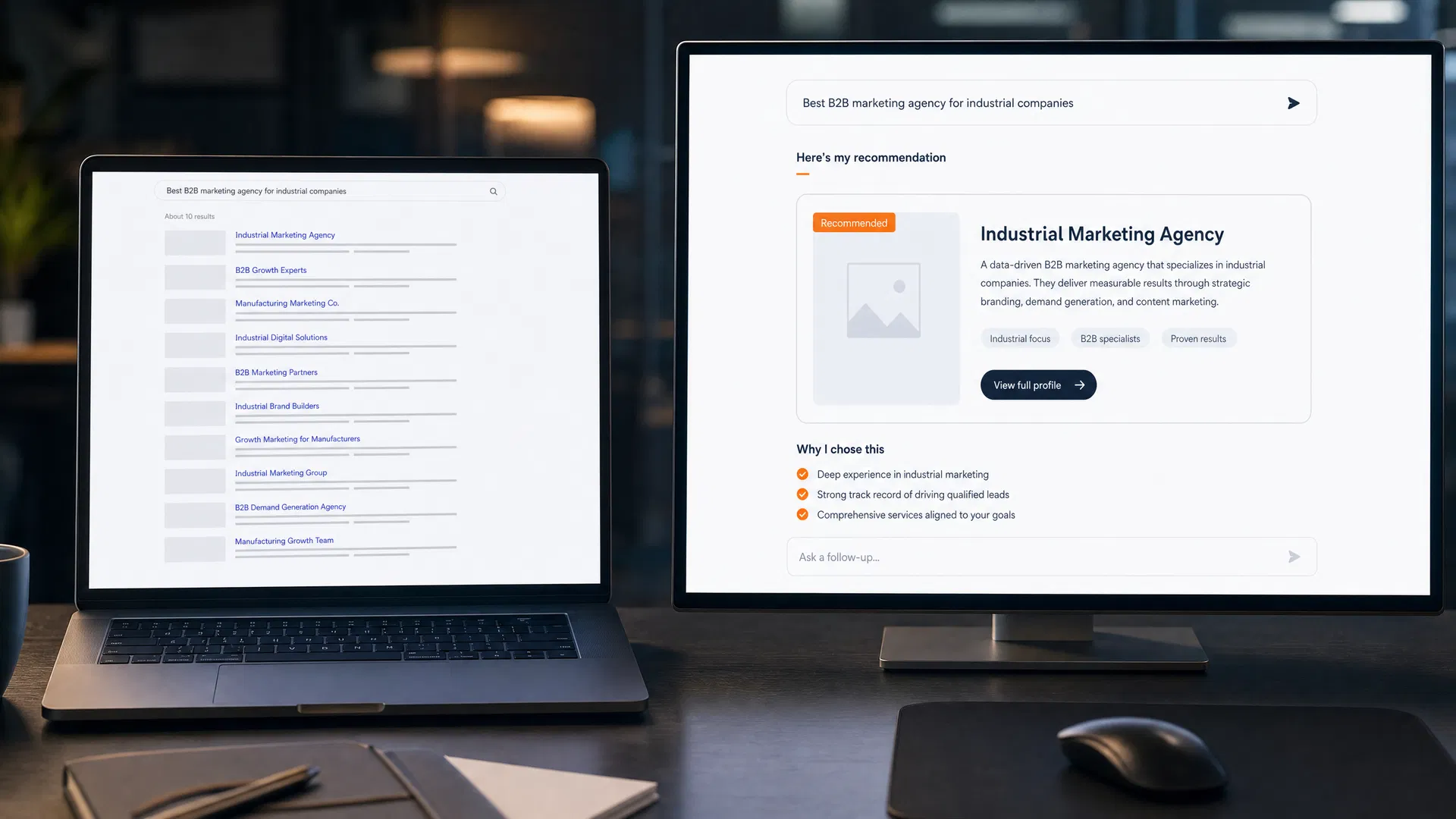
A prospect emailed me last week and said, "I asked ChatGPT who the top fractional CMOs in Dallas were. You came up. That is why I am writing."
That is the moment the marketing playbook changed. Not slowly. Not theoretically. In one email from a real buyer who skipped Google entirely, went straight to an AI tool, asked for a shortlist, and acted on the answer it gave.
The discipline has a name: generative engine optimization, or GEO. For B2B companies, the AI shortlist is becoming the first moment of evaluation, which means the companies that are machine-readable and easy to verify are the ones most likely to get named.
Last updated: May 12, 2026
The examples and observations in this post come from running AI visibility audits on real business websites across multiple industries.
What it is: Generative Engine Optimization (GEO) is the practice of structuring your website and online presence so AI tools can find, verify, and cite your business when buyers ask for recommendations.
Why it matters: AI tools like ChatGPT and Perplexity return one confident answer, not a list of links. If your business is not structured for AI to read and trust, it will not be named.
Who it is for: B2B companies, service businesses, professional practices, and any organization that relies on being found by buyers who are now asking AI assistants instead of searching Google.
The Game Has Shifted. Most Companies Have Not.
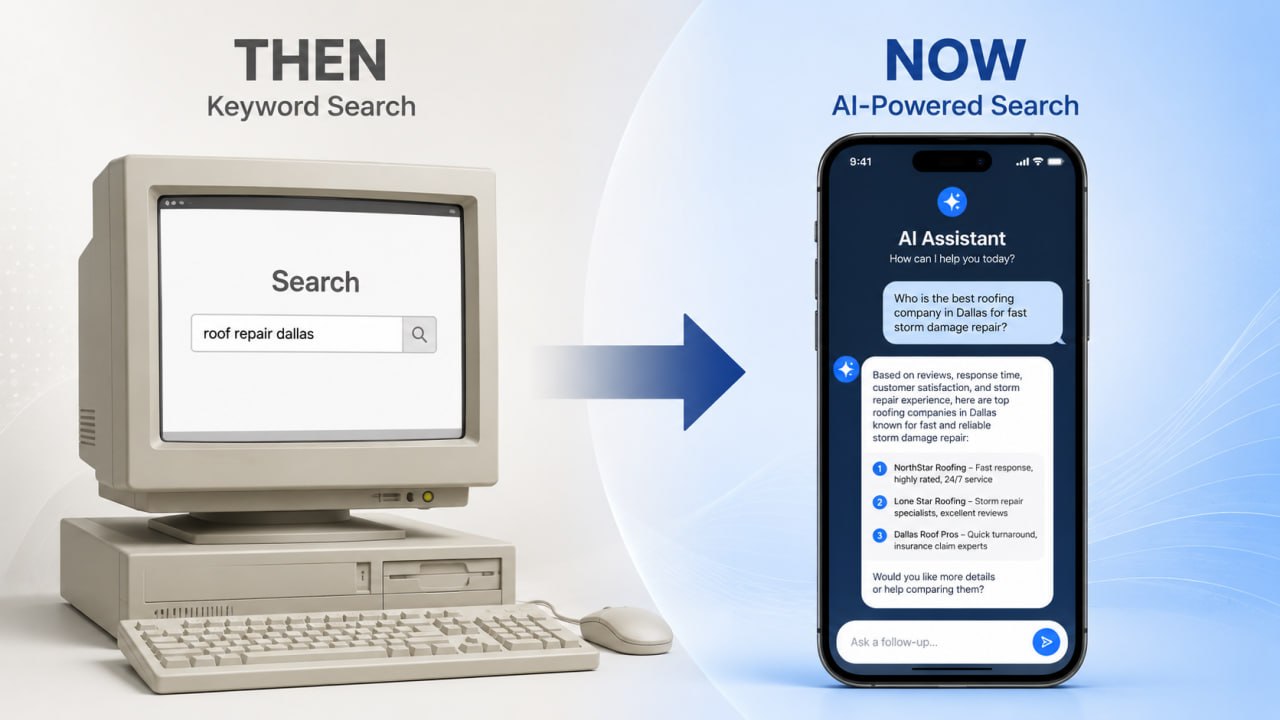
For 20 years, the question for every B2B company was whether its website ranked on Google. Today, the question is whether your company gets named when a buyer asks ChatGPT, Claude, Perplexity, or Gemini for a recommendation.
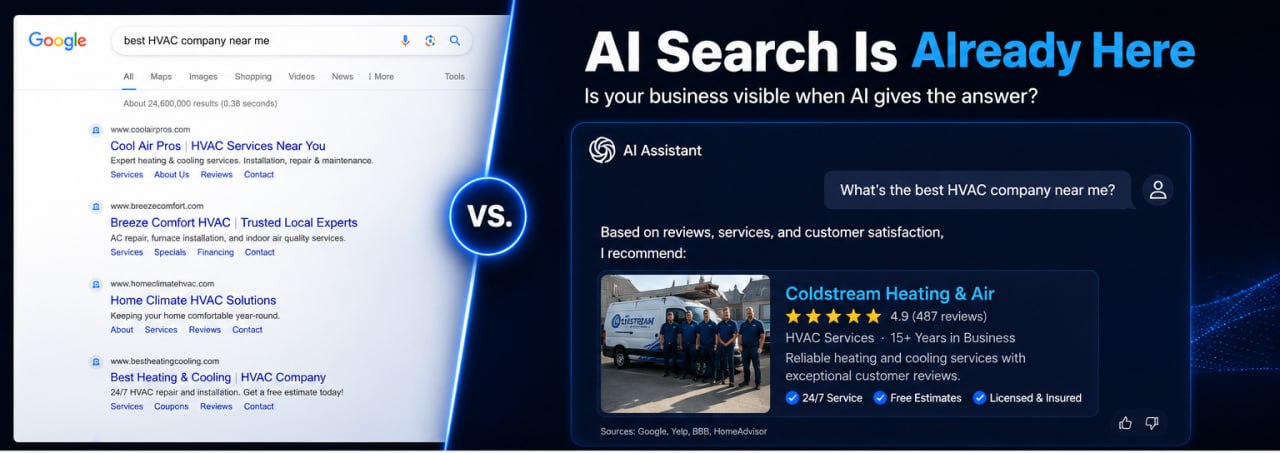
That is a different game. Google rewarded keywords and links. AI tools reward citations, structured information, and consistent presence across the sources the models trust. That is why AI visibility for businesses is now a separate discipline, not a side effect of older SEO work.
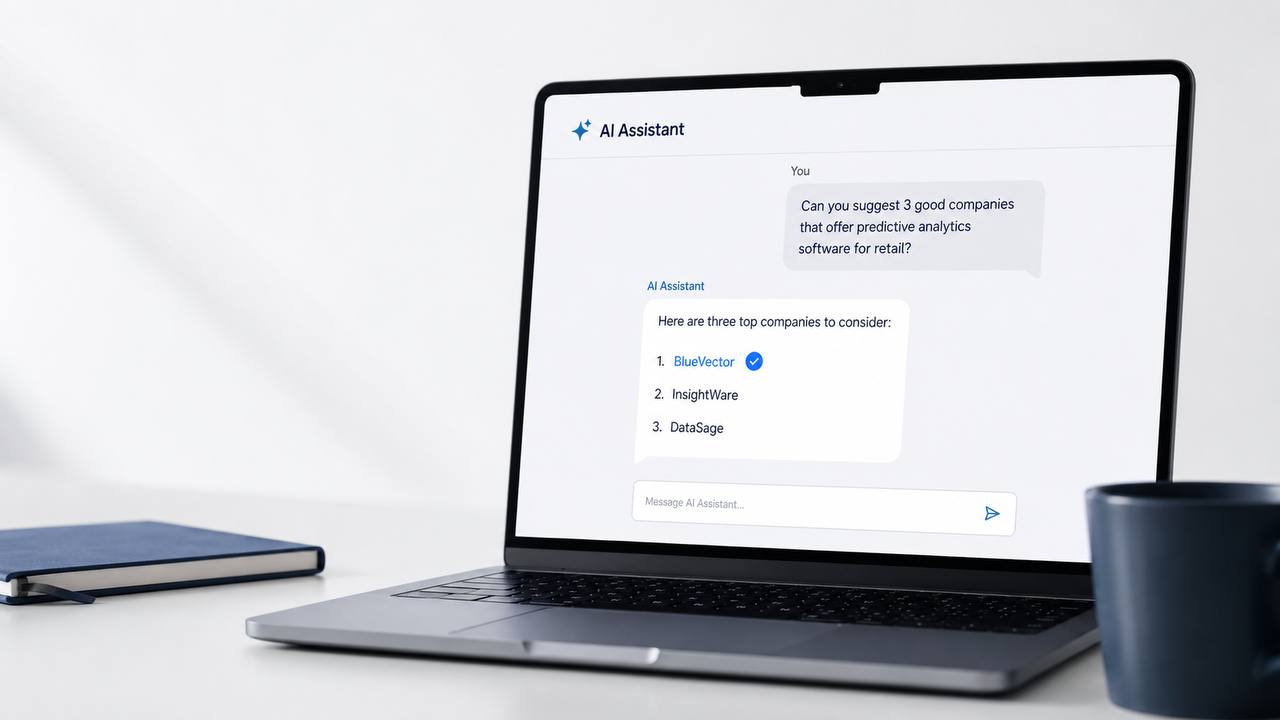
Think about what happens in that moment. A buyer sits at their desk with a problem. They open ChatGPT and type, "Who are the top three cybersecurity firms for mid-size manufacturers in the Midwest?" The model returns one confident answer. Not ten links. Not a paid ad at the top. One answer, stated plainly, as if a trusted colleague had just told them who to call.
If your name is in that answer, you get the call. If it is not, you may never know the conversation happened.
Search did not go away. The judge changed.
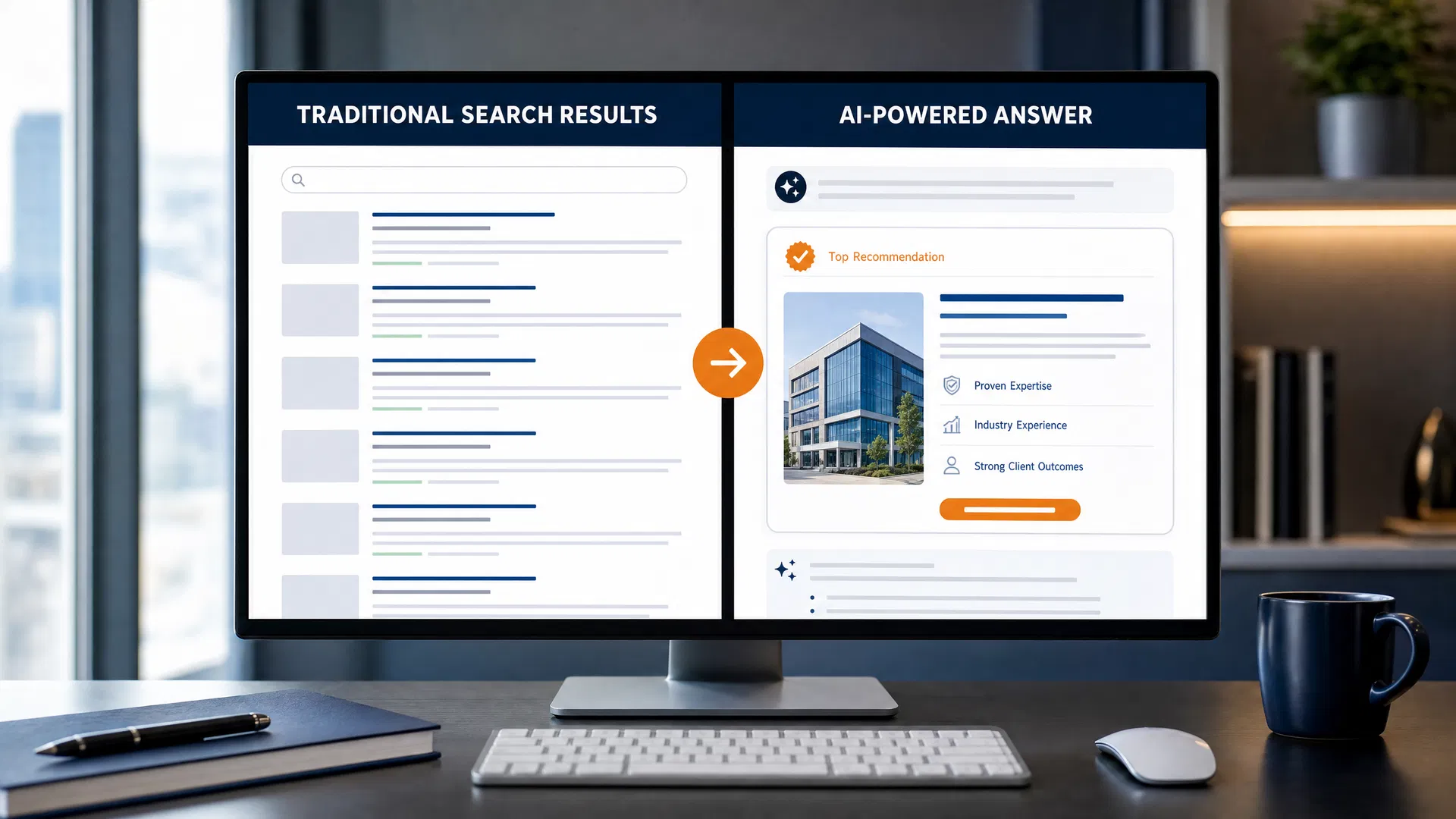
What Actually Happens When a Buyer Asks AI for a Recommendation
The model does not crawl your website live. It pulls from training data, connected web search tools, third-party sources it has been calibrated to trust, and structured data about your company across the open web.
If your company name shows up consistently across that landscape, you get cited. If it does not, you get left out. Here is the part that catches most business owners off guard: you can be the best fractional CMO, the top plumber, or the most experienced accountant in your city and still not appear in the answer because the answer is built from what the model can find and verify about you, not simply from what is true.
For ChatGPT recommendations for businesses, the pattern is increasingly consistent. The model is choosing the business it can explain with the greatest confidence. It is making a recommendation, not offering a neutral directory listing.
GEO vs SEO: a business with a strong Google ranking and a weak AI visibility score is not unusual. Google rewards keyword targeting and backlinks. AI systems reward structured identity signals and machine-readable context. A site optimized for one is not automatically ready for the other.
Reputation does not automatically transfer. You have to structure it so the tools can read it.
Run a Free AI Visibility Check Now
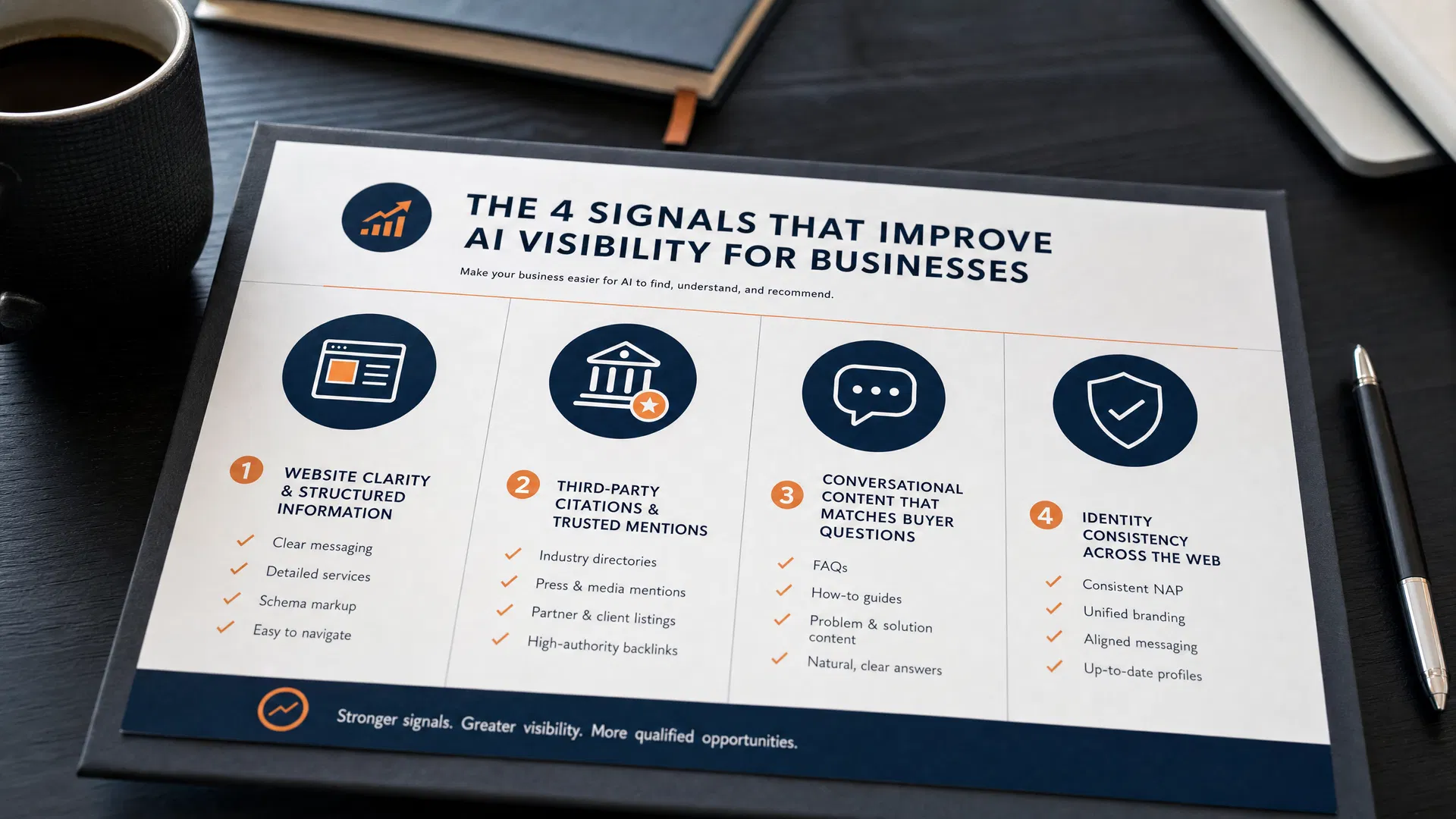
The Four Signals That Put Your Name in AI Answers
Consistent Entity Presence Across Trusted Sources
Your name and your offer have to appear in places the models trust: podcast appearances, industry articles, third-party directories with editorial standards, and press coverage that was actually indexed. The models cross-reference what they see. The more credible places your name appears, the more confident the model becomes in naming you.
We see this in audits all the time. A company may have a strong website but almost no corroborating mentions elsewhere, which leaves the model with too little confirmation to cite them confidently.
Structured Data and Machine-Readable Files
Your own website has to clearly state who you are, who you help, and what makes you different. Plain language matters, but so does schema markup for AI. When the machine can read the underlying structure of the page, the odds of a clean recommendation improve.
This is where most teams discover the gap. The human-facing pages look fine, but the site is missing the technical signals that help AI systems connect business identity, services, location, and credibility.
Content That Matches Conversational Query Patterns
Your content has to answer the actual questions buyers type into these tools, not the keyword list from 2020. Buyers ask things like, "Who should I hire for X in Y city?" and "How do I know if this vendor is the right fit?" If your site answers those questions clearly, the models notice.
The strongest pages are not broad marketing brochures. They are pages that sound like a real conversation with a buyer who is trying to make a decision.
Name and Identity Consistency Across the Web
You need consistency. Your business name, title, company description, market focus, and credentials should look the same wherever they appear. Mismatched bios, outdated descriptions, and contradictory credentials confuse the model the same way they confuse a human researcher.
One local service company we reviewed had three versions of its business name across its website, Google Business Profile, and directory listings. The AI tool could not resolve which entity was canonical, and it recommended a competitor instead.
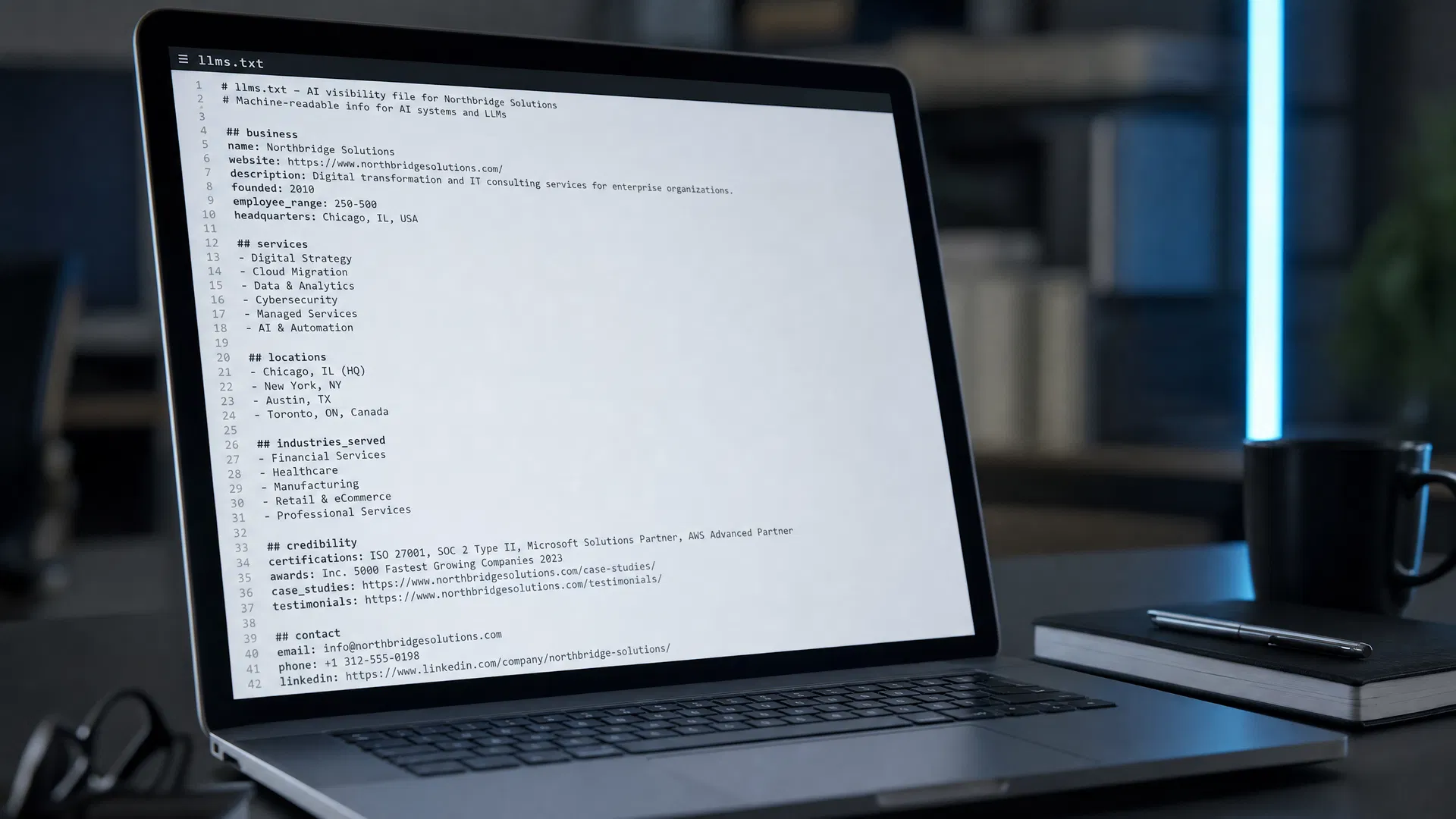
The Files Most Businesses Are Missing (And Why They Matter)
There is a specific set of machine-readable files that AI systems look for when evaluating whether a business is credible enough to name. Most businesses do not have them. Most web developers have never heard of them.
llms.txt for business websites, schema markup, ai.json, robots.txt, and an accurate sitemap all help AI-connected systems understand what your company does, who it serves, and why it is credible.
None of these files are visible to customers. They are invisible trust signals that live behind the scenes.
When they are missing, the model has to guess. And when a model guesses, it often names a competitor whose signals are cleaner.
This is not a redesign problem. It is a signal problem, and it is fixable.
How to Check Your AI Visibility Right Now
The fastest way to know where you stand is to test it honestly. Open ChatGPT, Claude, Perplexity, and Gemini. Ask each one, "Who are the top three companies that do what my company does in my market?" Then compare the answers.
After that, run an AI visibility check on your own website at Get Cited AI. It takes about 60 seconds and shows you a score, a grade, and a plain-English explanation of which signals are missing.
4 steps to check and improve your AI visibility:
- Run the free check at Get Cited AI to see your current score and grade.
- Identify which machine-readable signal files are missing from your site.
- Add or update schema markup so AI tools can read your business identity correctly.
- Build consistent presence across third-party sources the models trust.
Common GEO mistakes:
- Assuming good SEO means good AI visibility.
- Having inconsistent business name, location, or category across web properties.
- Missing llms.txt or schema markup entirely.
- Treating GEO as a Phase 2 item rather than a current priority.
The Window That Is Open Right Now
The shortlist is no longer built by your prospect. It is built by an AI tool the prospect trusts. If your company is not on it, you do not get the meeting. The buyer does not call to tell you they chose someone else. They call the name that came up.
There is a window right now that will not stay open. In the early days of Google, the companies that claimed their Google Business Profile and built clean, keyword-organized websites got a head start that competitors spent years trying to close. The same dynamic is happening with GEO right now.
The companies structuring their websites for AI citation in 2026 are building a presence advantage that will compound as these tools handle more of the early buyer research. The ones who wait until it is obvious are waiting until the gap is already wide.
You do not need to understand how the models work. You do not need to learn how JSON-LD is parsed or how llms.txt gets interpreted. You do need to find out whether you have the problem.
Frequently Asked Questions About AI Visibility and GEO
What is the difference between GEO and SEO?
SEO focuses on ranking your website in Google search results by optimizing for keywords and backlinks. GEO focuses on making your business visible in AI-generated answers by providing machine-readable signals that AI tools use to select and name specific companies. Both matter in 2026, but they require different tactics.
How does ChatGPT decide which businesses to recommend?
ChatGPT draws on its training data, connected web search tools, and third-party sources it has been calibrated to trust. Businesses that appear consistently across credible sources, with clear structured data on their websites, are more likely to be named in recommendations.
What is an llms.txt file?
An llms.txt file is a machine-readable document placed on a business website that tells AI language models exactly what the business does, who it serves, where it is located, and why it is credible. It is one of the primary signal files used in GEO.
Do I need to redesign my website to improve AI visibility?
No. AI visibility improvements are typically made through adding or updating background signal files and structured data, not through a visual website redesign. The changes are invisible to human visitors but readable by AI systems.
How do I find out if my business is currently visible to AI tools?
You can run a free AI visibility check at Get Cited AI. Enter your domain and you will receive a score, a letter grade, and a plain-English explanation of which signals are missing and why they matter.
Is GEO only for large companies?
No. GEO is particularly valuable for small and mid-size businesses that rely on being found by new customers. Local service businesses, professional practices, and B2B companies with strong operations but weak digital signals stand to gain the most from GEO improvements.
How long does it take for AI visibility improvements to show results?
Signal files and schema markup can be indexed by AI-connected systems within days to weeks. However, building consistent third-party presence across credible sources takes longer and compounds over time.
What is the difference between GEO and AEO?
AEO (Answer Engine Optimization) and GEO (Generative Engine Optimization) refer to closely related practices. AEO typically focuses on optimizing content to appear in featured snippets and voice search answers. GEO specifically targets generative AI tools like ChatGPT, Perplexity, and Gemini. In practice, many of the tactics overlap.